Blog
18650 Battery Specs: The Complete Guide to Voltage, Capacity & Choosing the Right Cell
2026-04-25 | Eric
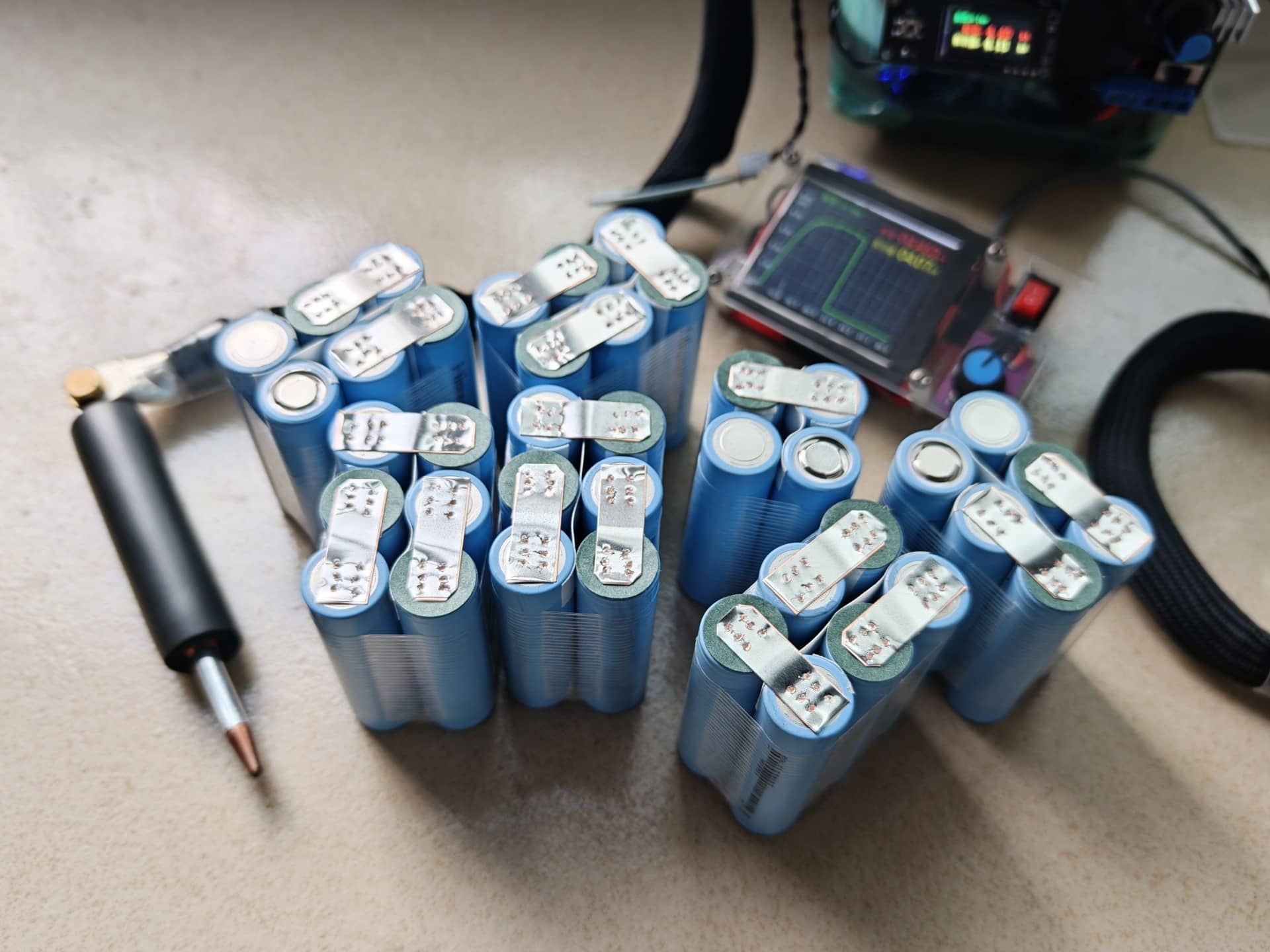
The 18650 lithium battery is arguably the most important cylindrical cell ever made. It powers Tesla vehicles, electric bikes, high-performance flashlights, laptops, and thousands of DIY battery packs worldwide. Yet despite its ubiquity, the specs printed on the label — 3.7V, 2600mAh, 10A — can be confusing without context.
This guide breaks down every critical 18650 battery specification in plain language, whether you are a first-time DIY builder, a professional system integrator, or an overseas buyer sourcing cells in bulk. By the end, you will know exactly which cell to choose for your application.
What Does "18650" Mean? The Naming Convention Explained
The name "18650" is not a model number — it is a precise physical description of the cell's dimensions:
- 18 — Diameter of 18 mm
- 65 — Length of 65 mm
- 0 — Cylindrical shape
This naming convention is shared across the cylindrical cell family. For example, a 21700 cell is 21 mm wide and 70 mm long. The 18650 format was standardized by Sony in the early 1990s and remains the global benchmark for cylindrical lithium-ion cells.
Important note on length: Unprotected cells measure a true 65 mm. Protected cells — which include a small safety PCB on one end — can measure 67–68 mm. Always verify before fitting them into a device or housing.
18650 Battery Core Specs at a Glance
| Specification | Standard Value | Notes |
|---|---|---|
| Diameter | 18 mm | Unprotected cells only |
| Length | 65 mm (unprotected) / 67–68 mm (protected) | Check housing fit before ordering |
| Nominal Voltage | 3.6V or 3.7V | Average voltage over full discharge cycle |
| Max Charging Voltage | 4.2V | Never exceed — fire/explosion risk |
| Discharge Cut-off Voltage | 2.5V – 3.0V | BMS cuts power here to protect the cell |
| Typical Capacity Range | 1500 – 3600 mAh | Higher ≠ always better (see C-rating) |
| Max Discharge Current | 5A – 35A+ | Depends on cell chemistry and design |
| Energy Density | ~250 Wh/kg | Higher than LiFePO4, lower than NMC pouch |
| Cycle Life | 300 – 500 cycles (to 80% capacity) | Quality cells exceed 500 cycles |
| Operating Temperature | -20°C to 60°C | Charge only above 0°C |
Voltage Explained: 3.2V vs 3.6V vs 3.7V vs 4.2V
Voltage is the most misunderstood spec on an 18650 battery. Here is what each number actually means:
- 4.2V — Full charge voltage. This is the absolute maximum. Exceeding it causes thermal runaway, fire, or explosion. A quality charger will stop at exactly 4.2V.
- 3.6V / 3.7V — Nominal voltage. This is the average voltage the cell delivers across a complete discharge cycle. Both values appear on labels depending on the manufacturer's measurement method; they refer to the same cell type.
- 2.5V – 3.0V — Discharge cut-off. At this point, your BMS (Battery Management System) should disconnect the load. Discharging below this threshold causes irreversible capacity loss.
- 3.2V — This is the nominal voltage of LiFePO4 chemistry, not standard NMC/Li-Ion 18650 cells. If you see 3.2V on an 18650, it is a LiFePO4 variant with a different charge profile.
Practical takeaway: When wiring cells in series, multiply the nominal voltage (3.6V or 3.7V) by the number of cells to get your pack voltage. A 4S pack delivers approximately 14.4V–14.8V nominal.
Capacity (mAh) and C-Rating: What Actually Matters
Capacity (mAh) measures how much energy the cell stores — think of it as the size of the fuel tank. C-rating measures how fast that energy can be delivered — think of it as the fuel pump's flow rate.
Capacity Tiers
- Standard capacity (1500–2600 mAh): Often used in high-drain applications like power tools, where discharge current matters more than runtime.
- High capacity (2800–3600 mAh): Used in e-bikes, EV battery packs, and flashlights where longer runtime is the priority.
The Capacity-vs-Current Tradeoff
Higher mAh cells generally have lower maximum discharge current. For example, a 3500 mAh cell may be rated for only 10A continuous, while a 2000 mAh high-drain cell may handle 20–25A continuously. Choosing the wrong type can result in overheating, voltage sag, or premature cell failure.
⚠️ Fake Capacity Warning: Any 18650 cell advertised as 5000 mAh, 8000 mAh, or 9900 mAh is counterfeit. The physical and chemical limits of 18650 format cap real capacity at approximately 3600 mAh. These fake cells typically contain a much smaller cell inside and are a fire hazard. Only buy from verified manufacturers.
Protected vs. Unprotected 18650 Cells
This distinction directly affects safety and application suitability. Always choose based on your specific use case:
| Feature | Protected Cell | Unprotected Cell |
|---|---|---|
| Safety PCB | Yes — built-in overcharge/over-discharge/short-circuit protection | No — requires external BMS |
| Length | ~67–68 mm | ~65 mm (true spec) |
| Max Discharge Current | Lower (PCB limits current) | Higher (up to 35A+ for high-drain cells) |
| Typical Use Case | Flashlights, vaping devices, single-cell applications | DIY battery packs, EV packs, power tools |
| Price | Slightly higher | Lower |
| Risk without BMS | Lower — PCB acts as backup | High — must pair with quality BMS |
Flat Top vs. Button Top: Physical Differences That Matter
Beyond chemistry and capacity, the physical terminal shape of an 18650 cell determines whether it will work in your device or battery pack design.
Flat Top Cells
- Compatible with spot welding (nickel strips weld directly to the flat surface)
- They fit tightly in parallel or series arrangements without added height
- Most OEM and industrial packs use flat top cells exclusively
Button Top Cells
- Suitable for flashlights, torches, and consumer devices with spring-loaded battery compartments
- Can be used in series connections in holders where physical contact depends on protrusion
- Retrofit replacements in devices originally designed for button top cells
Important: Do not mix flat top and button top cells in the same pack. Inconsistent contact pressure can cause high-resistance connections, uneven charging, and cell damage. When in doubt, consult the device or pack manufacturer's datasheet.
Frequently Asked Questions (FAQ)
1. What is the maximum real capacity of an 18650 battery?
As of 2025–2026, the genuine maximum capacity for a commercially available 18650 cell is approximately 3600 mAh, achieved by premium cells from manufacturers such as Panasonic and Samsung SDI. Any cell claiming significantly higher capacity is either mislabeled or counterfeit.
2. What is the difference between 18650 and 21700 batteries?
The 21700 cell is 21 mm in diameter and 70 mm long, making it physically larger than the 18650. This larger format allows higher capacity (typically 4000–5000 mAh) and better heat dissipation. Tesla switched from 18650 to 21700 cells in its Model 3 for these reasons. However, 18650 remains more widely supported in existing devices and DIY applications.
3. Can I replace 18650 cells with LiFePO4 18650 cells?
Only if your charger and BMS support LiFePO4 voltage profiles. LiFePO4 18650 cells have a nominal voltage of 3.2V and a max charge voltage of 3.65V — significantly different from the 3.7V/4.2V profile of standard Li-Ion cells. Using a Li-Ion charger on a LiFePO4 cell will overcharge it and may cause damage or fire.
4. How many 18650 cells do I need for a 12V battery pack?
A standard 12V nominal pack typically uses 4 cells in series (4S configuration), which gives 14.4V–14.8V nominal and 16.8V fully charged. For a 12V lithium pack that is compatible with lead-acid systems, a 4S LiFePO4 pack (12.8V nominal) is often a better match since its voltage range more closely mimics a 12V lead-acid battery.
5. How long do 18650 batteries last?
A quality 18650 cell from a reputable brand typically retains 80% of its original capacity after 300–500 full charge cycles under normal conditions. Partial charging (keeping the cell between 20%–80% state of charge) and avoiding high-temperature storage can significantly extend cycle life beyond 500 cycles.
Conclusion
Understanding 18650 battery specs is the foundation for building reliable, safe, and efficient battery systems. Whether you need high-capacity cells for solar storage, high-drain cells for power tools, or protected cells for consumer devices, the right choice depends on matching voltage, capacity, discharge rate, and terminal type to your specific application.
Popular Articles
Contact Details
Worktime :Monday to Friday 9am - 6pm (HKT)
WhatsApp/Wechat/Mobile :+8613645616165
Email : info@lifepo4cellstore.com