Blog
Ternary Lithium Battery Guide: Performance, Cycle Life & Safety Explained
2026-05-02 | Eric
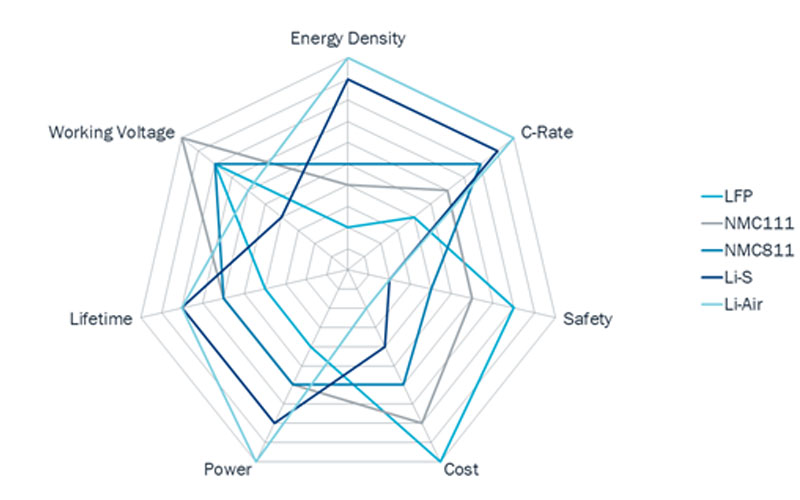
Most people buying a battery today don't think much about what's inside it. But the chemistry behind a battery pack determines nearly everything: how long it lasts, how safe it is, and how well it performs in the cold. If you've come across the term ternary lithium battery — or heard it called NCM or NMC — you're already asking the right questions. This guide breaks down exactly what ternary lithium batteries are, where they shine, where they fall short, and how to figure out whether one belongs in your next project or purchase.
What Is a Ternary Lithium Battery?
A ternary lithium battery is a type of lithium-ion battery whose cathode is made from three metal oxides blended together: nickel, cobalt, and manganese. That's where the names NCM (or NMC) come from — Nickel, Cobalt, Manganese. Sometimes you'll also see NCA (Nickel, Cobalt, Aluminum), which is a close relative.
Each metal plays a specific role in the battery's behavior:
- Nickel boosts energy density — more nickel means more energy stored per kilogram
- Cobalt improves structural stability, keeping the cathode from degrading too quickly
- Manganese enhances safety and helps lower cost
Battery makers can adjust the ratio of these three elements to fine-tune performance. An NCM 811 cell (80% nickel, 10% cobalt, 10% manganese) prioritizes energy density; an NCM 111 cell splits them evenly and leans toward stability. This flexibility is one reason ternary lithium batteries appear in such a wide range of products. You'll typically find them sold as individual cells (the core electrochemical unit) or as assembled battery packs, which combine cells with a Battery Management System (BMS) and protective housing.
How Does a Ternary Lithium Battery Actually Work?
Think of a lithium-ion battery like a commuter shuttling between two stations. The commuter is a lithium ion, and the two stations are the anode (usually graphite) and the cathode (the NCM blend).
When you charge the battery, lithium ions move from the cathode to the anode and park there, storing energy. When you discharge — powering your device or vehicle — those ions flow back to the cathode, releasing energy along the way. The BMS acts like a traffic controller, making sure the ions move safely, the temperature stays in range, and nothing gets pushed past its limits.
A single NCM cell operates at a nominal voltage of around 3.6–3.7V. String enough cells together, and you can build packs for anything from a laptop to a long-range electric vehicle.
Key Advantages of Ternary Lithium Batteries
1. High Energy Density
This is the headline feature. Ternary lithium batteries pack 200–293 Wh/kg of energy — significantly more than most competing chemistries. That means smaller, lighter packs for the same amount of power. For an EV, that translates directly into driving range. For a drone, it means longer flight time. For power tools, it means a slimmer battery that doesn't weigh your arm down.
2. Higher Voltage Platform
At 3.6–3.7V per cell, NCM batteries deliver more usable energy per cell than LiFePO4 (3.2V) or LTO (2.3V). Fewer cells are needed to reach a target voltage, which simplifies pack design and often reduces cost at the system level.
3. Better Low-Temperature Performance
Cold weather is a known weakness of LiFePO4 batteries — their capacity drops noticeably below 0°C. NCM batteries hold up better in cold conditions, which matters for outdoor equipment, electric vehicles in winter climates, and any application where the battery might sit in a cold garage or warehouse overnight.
4. Mature Supply Chain and Broad Availability
NCM technology has been in mass production for over a decade. That means well-established manufacturing, widely available replacement cells, and predictable pricing — a practical advantage for B2B buyers building or maintaining product lines.
Key Disadvantages of Ternary Lithium Batteries
1. Lower Thermal Stability
This is the most important trade-off to understand. When NCM cells are exposed to high heat — particularly above 200°C — the cathode material can decompose and release oxygen, which can trigger thermal runaway: a self-reinforcing chain reaction of heat and gas that can result in fire. This doesn't mean NCM batteries are dangerous in everyday use; modern BMS systems and thermal management are designed specifically to prevent these conditions. But it does mean the chemistry demands more careful engineering than LiFePO4.
2. Shorter Cycle Life
Ternary lithium batteries typically deliver 800–1,000 full charge-discharge cycles before dropping to around 80% of their original capacity. LiFePO4 cells can reach 2,000–6,000 cycles under similar conditions. If your application involves daily cycling over many years — a home solar system, for example — that shorter lifespan translates to significantly higher long-term replacement cost.
3. Cobalt Dependency
Cobalt is expensive, geographically concentrated, and linked to supply chain concerns. Battery makers have been progressively reducing cobalt content (the shift from NCM 111 to NCM 811 reflects this), but it remains a factor in both cost and sourcing risk for large procurement orders.
Ternary Lithium vs. LiFePO4: Head-to-Head
| Feature | Ternary Lithium (NCM) | LiFePO4 |
|---|---|---|
| Energy Density | 200–293 Wh/kg | ~150 Wh/kg |
| Cycle Life | 800–1,000 cycles | 2,000–6,000 cycles |
| Nominal Voltage | 3.6–3.7V per cell | 3.2V per cell |
| Thermal Safety | Lower (risk above 200°C) | Higher (stable up to 270°C) |
| Low-Temp Performance | Better (down to -20°C) | Weaker below 0°C |
| Weight | Lighter | Heavier |
| Cost | Higher (cobalt content) | Lower |
| Best For | EVs, drones, power tools | Solar, RVs, home storage |
Real-World Applications
Electric Vehicles
Many leading EV manufacturers rely on NCM chemistry for high-range models. The high energy density allows for the driving range consumers expect without adding excessive weight to the vehicle.
Consumer Electronics and Power Tools
Laptops, cordless drills, and handheld vacuums almost universally use NCM or its close relative NCA. In these applications, the ability to pack a lot of energy into a small, light cell is non-negotiable.
Drones and UAVs
Flight time is directly tied to energy density. NCM cells are the default choice for commercial and consumer drones where every gram of battery weight matters.
Where NCM Is Not the Right Choice
Stationary home solar storage, RV house batteries, and off-grid backup systems are areas where LiFePO4 consistently makes more sense. These applications involve frequent daily cycling over a decade or more, often indoors or in enclosed spaces where fire risk is a serious concern. The longer lifespan and superior safety profile of LiFePO4 make it the better fit — even if it's heavier and lower energy density.
How to Choose the Right Battery for Your Needs
| Choose NCM if you need… | Choose LiFePO4 if you need… |
|---|---|
| High energy in limited space | Maximum cycle life (10+ years) |
| Lightweight packs for mobility | Safer chemistry for indoor use |
| Better cold-weather range | Lower upfront cost |
| EV or drone performance | Home solar or RV storage |
One more practical tip: always check the BMS specification alongside the cell. A high-quality NCM cell paired with an undersized or poorly designed BMS is a worse combination than a mid-range cell with a robust management system. The BMS is what keeps the chemistry safe day to day.
Frequently Asked Questions
What does 'ternary' mean in ternary lithium battery?
It refers to the three-metal cathode composition: nickel, cobalt, and manganese (or aluminum in NCA variants). The word 'ternary' simply means 'composed of three parts.'
Are ternary lithium batteries safe for home use?
They can be, but they require proper thermal management and a reliable BMS. For indoor stationary storage — home solar, backup power — LiFePO4 is generally the safer and more practical choice due to its higher thermal stability and longer cycle life.
How long do ternary lithium batteries last?
Under typical conditions — moderate temperatures, regular cycling — expect 800 to 1,000 full charge-discharge cycles before capacity drops to around 80%. Real-world lifespan depends heavily on how the battery is used, charged, and stored.
Can ternary lithium batteries be used in cold climates?
Yes, and this is one of their genuine strengths. NCM cells maintain better performance in cold temperatures compared to LiFePO4, making them a solid choice for EVs and outdoor equipment in winter conditions. That said, charging at very low temperatures (below -10°C) should still be done at a reduced rate to protect the cells.
What's the difference between NCM 111, 622, and 811?
These numbers refer to the ratio of nickel, cobalt, and manganese in the cathode. NCM 111 is balanced and stable. NCM 622 pushes more toward energy density. NCM 811 maximizes energy density with the least cobalt. Higher nickel content means more energy but also more careful thermal management requirements.
Final Thoughts
Ternary lithium batteries are a genuinely impressive technology. Their combination of high energy density, good voltage output, and cold-weather resilience has made them the backbone of the EV industry and consumer electronics world. But they are not a one-size-fits-all solution.
If you're building a battery pack for a drone, EV conversion, or high-performance power tool — NCM is likely your best option. If you're setting up a home solar bank or need a battery that will cycle daily for a decade with minimal maintenance, LiFePO4 will serve you better in the long run.
Understanding which chemistry fits your use case is the most important step before any purchase. When in doubt, compare the full spec sheet — not just the headline energy density number.
Popular Articles
Contact Details
Worktime :Monday to Friday 9am - 6pm (HKT)
WhatsApp/Wechat/Mobile :+8613645616165
Email : info@lifepo4cellstore.com