Blog
Why Do Lithium Batteries Experience Internal Short Circuits?
2026-04-08 | Eric
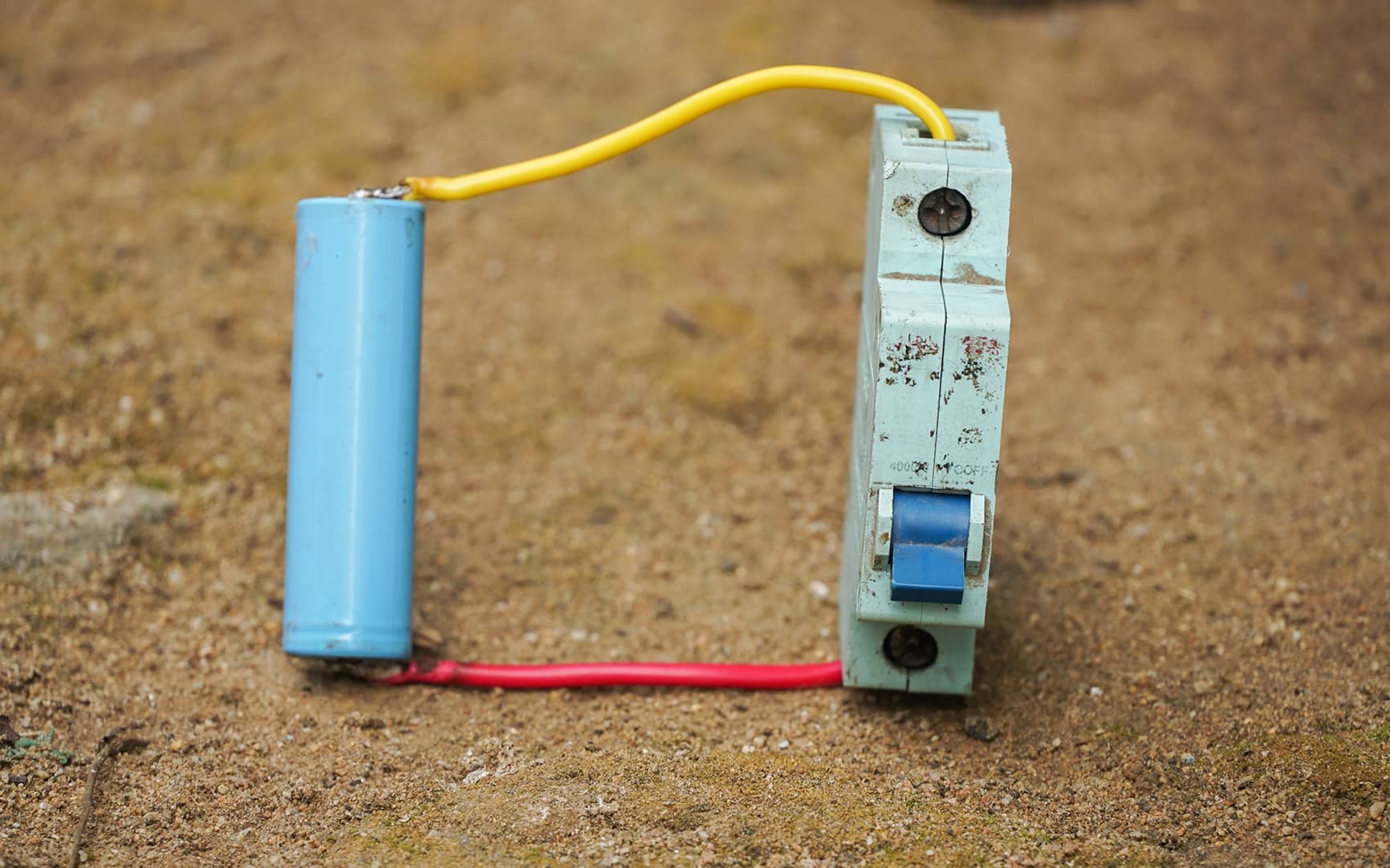
Every day, we use smartphones, laptops, and electric vehicles, all of which rely on lithium batteries for power. A lithium battery is like a small "factory" with a sandwich-like structure, primarily composed of five key components: the positive electrode, negative electrode, separator, electrolyte, and outer casing. Lithium batteries are compact and efficient, but when an internal short circuit occurs (when the positive and negative electrodes make direct or indirect contact), it can lead to dangerous consequences.
1. How Dangerous Is an Internal Short Circuit in a Lithium Battery?
(1) Battery Degradation: Reduced battery life, shorter usage time
An internal short circuit can cause the battery’s energy to "leak away" even when it's not in use, leading to a gradual decrease in charge—this is what's known as "self-discharge." It's like a cup with a small hole slowly leaking water. The battery will lose charge over time, causing your smartphone or electric vehicle to run out of power quickly after charging, significantly reducing its endurance.
(2) High Temperature Hazard: Risk of fire and explosion, threatening personal safety
This is the most dangerous consequence of an internal short circuit! When an internal short circuit occurs, the energy inside the battery instantly transforms into a large amount of heat, causing the temperature to rise rapidly. This creates a vicious cycle of "the hotter it gets, the more it short circuits, and the more it short circuits, the hotter it gets." When the temperature reaches a certain level, the electrolyte and electrode materials inside the battery react violently, generating a large amount of gas and heat. This can cause the battery to swell, emit smoke, and in severe cases, catch fire or explode, posing significant threats to both people and surrounding objects.
(3) Internal Component Failure: The battery becomes unusable
High temperatures and abnormal currents can burn or rupture the separator, causing this line of defense to fail completely. The direct contact between the positive and negative electrodes becomes more severe, and the short circuit worsens. Additionally, the electrode materials may be damaged, preventing them from storing or transporting lithium ions, rendering the battery completely "dead." It can no longer charge or discharge and must be discarded.
(4) Expanded Danger: Affected surroundings, environmental pollution
If the device, like an electric vehicle or power bank, consists of multiple smaller batteries forming a "battery pack," one battery experiencing an internal short circuit can cause nearby batteries to malfunction as well. This can trigger a chain reaction, causing the entire battery pack to catch fire or explode, making the situation even more difficult to handle. Moreover, when the battery burns or explodes, harmful liquids inside the battery may leak, potentially causing environmental pollution. In confined spaces like rooms or subways, the danger will further escalate.
2. Four Types of Internal Short Circuits in Lithium Batteries: Different Combinations, Different Risks
Both the positive and negative electrodes consist of two core components: a "core working part" (the electrode coating, responsible for storing and transporting lithium ions) and a "conductive support part" (the current collector, responsible for conducting current). The interaction of these components results in four types of internal short circuits, each with different risk levels:
- Positive electrode coating – Negative electrode coating: Weak conductivity and minimal heat generation, moderate risk, unlikely to cause severe danger.
- Positive electrode current collector – Negative electrode coating: High heat generation and poor heat dissipation, very high risk, temperature rises quickly, potentially leading to thermal runaway.
- Positive electrode coating – Negative electrode current collector: Minimal heat generation, good heat dissipation, lowest risk, almost no significant danger.
- Positive electrode current collector – Negative electrode current collector: Strongest conductivity and excessive heat generation, very high risk, releases a large amount of energy instantly, highly prone to fire and explosion.
The core difference in risk comes from the conductivity, heat generation, and heat dissipation abilities of these materials. The stronger the conductivity, the more heat generated, and the worse the heat dissipation, the higher the risk.
3. The 5 Major Causes of Internal Short Circuits in Lithium Batteries
Internal short circuits don’t happen out of nowhere. They are mainly caused by one of five factors: manufacturing defects, improper usage, or long-term wear and tear.
Material Defects: "Innate risks" during manufacturing
If metal impurities like iron or copper are mixed in during the battery’s manufacture, or if the electrode sheet has sharp "burrs," the separator has uneven pores, or the electrode coating peels off, these issues can cause the positive and negative electrodes to accidentally touch, setting the stage for an internal short circuit from the start.
Improper Charging/Discharging: "Using electricity incorrectly" triggers faults
Overcharging (such as leaving the charger plugged in all night, beyond the battery’s full charge) or excessive discharging (draining the battery completely) can imbalance the battery’s internal chemical state. Overcharging can lead to the formation of "lithium dendrites," tiny "spikes" that puncture the separator; excessive discharging can cause the copper foil in the negative electrode to dissolve, which later leads to short circuits.
Improper Temperature: "Uneven temperatures" harm the battery
Batteries have their own "safe temperature range," and exceeding this range can cause problems. High temperatures can cause the separator to shrink and the internal electrolyte to decompose. Low temperatures can promote the formation of lithium dendrites. Both can damage the battery's internal structure, leading to internal short circuits. For example, leaving your phone in a hot car during summer or parking your electric vehicle in freezing temperatures during winter can be dangerous.
External Force: "Rough handling" damages the structure
Battery compression, piercing, or intense vibration can rupture the separator or misalign the electrodes, causing the positive and negative electrodes to make direct contact, leading to an internal short circuit. For instance, if your phone gets squashed or your electric vehicle is involved in a collision, or if the battery gets pierced by a nail, these are typical scenarios where "external forces cause short circuits."
Battery Aging: "Natural wear and tear" over time
Just like our phones, batteries degrade with age. After multiple charge and discharge cycles, the protection layer inside the battery thickens, the active materials in the electrodes may powder, the current collectors get corroded, and the pores in the separator become blocked. These changes gradually increase the risk of internal short circuits, which is why older batteries are generally less safe than new ones.
In summary, internal short circuits occur due to either "inherent defects" (manufacturing flaws), "external damage" (compression or piercing), "improper use" (charging/discharging/temperature issues), or "aging" (long-term wear and tear). Any of these factors can disrupt the internal structure of the battery and lead to accidental contact between the positive and negative electrodes.
4. Six Major Protective Measures Against Internal Short Circuits: Adding a "Safety Net" to Batteries
To mitigate the risks of internal short circuits, scientists and engineers have designed various protective technologies, each targeting a different issue. These are like adding "multiple layers of safety net" to a battery.
Separator Improvement: Strengthening the "safety door" functionality
By adding a "dual-layer protection" to the separator, safety is enhanced: a ceramic coating (e.g., aluminum oxide or boehmite) is applied to the surface to make it more heat-resistant and durable, preventing shrinkage and damage; the "high-closing-temperature" design ensures that when the battery reaches 130°C, the separator automatically "closes," blocking the path for lithium ions and delaying the spread of the short circuit.
Structural Design: Blocking short circuit paths internally
Two designs are used to prevent short circuits: one is to coat the edges of the electrode sheets with an insulating layer to block tiny short circuit paths physically; the second is to design a reasonable N/P ratio (making the negative electrode material slightly more than the positive), ensuring that lithium dendrites won’t form when the battery is overcharged, preventing the "spikes" from piercing the separator.
Material Purification: Reducing "hidden risks" during manufacturing
Battery production takes place in "clean rooms" with strict control over the amount of metal impurities (as low as parts per million), minimizing the risk of short circuits from foreign objects by reducing impurities.
Electrolyte Additives: Adding protection to the "exclusive channel"
Special additives are used in the electrolyte (the exclusive path for lithium ions) to enhance safety: flame retardants (e.g., organic phosphates) prevent electrolyte combustion and decomposition; overcharge protectants (e.g., biphenyl) slow down thermal runaway reactions, preventing the escalation of danger.
BMS Strategy: Adding an "intelligent monitor" to the battery
By equipping the battery with an "intelligent monitoring system" (BMS), it can accurately monitor the voltage and temperature of each individual battery cell while balancing the charge across all cells. This helps prevent overcharging, over-discharging, and inhibits the formation of lithium dendrites, thus reducing the risk of internal short circuits.
Structural Protection: Setting up an "emergency power-off switch"
Batteries are equipped with various safety devices such as safety valves, CID (current interruption devices), and PTC elements. If abnormal pressure or temperature is detected, these devices will automatically cut off power to stop the battery from continuing its reaction or exploding, providing a last line of defense for battery safety.
5. Battery Safety Testing: Three Common Tests
(1) Needle Penetration Test: Directly tests internal short circuit safety
The needle penetration test involves using a needle to pierce the battery, inducing an internal short circuit to accurately assess the battery's safety performance in the event of an internal short circuit, simulating extreme scenarios such as being pierced by a nail.
(2) Compression Test: Simulates pressure-related safety
The compression test simulates typical situations where the battery is compressed or deformed (e.g., when a phone is sat on or the battery in an electric vehicle is subjected to impact), testing the safety under such conditions.
(3) Heavy Impact Test: Simulates risks from dropping or being hit by a heavy object
The heavy impact test simulates the real risks of the battery accidentally falling or being struck by a heavy object, such as when a phone drops or an electric vehicle battery is hit by falling debris.
Popular Articles
Contact Details
Worktime :Monday to Friday 9am - 6pm (HKT)
WhatsApp/Wechat/Mobile :+8613645616165
Email : info@lifepo4cellstore.com