Blog
12V System or 24V System: Which Is Better for an RV?
2025-12-24 | Eric
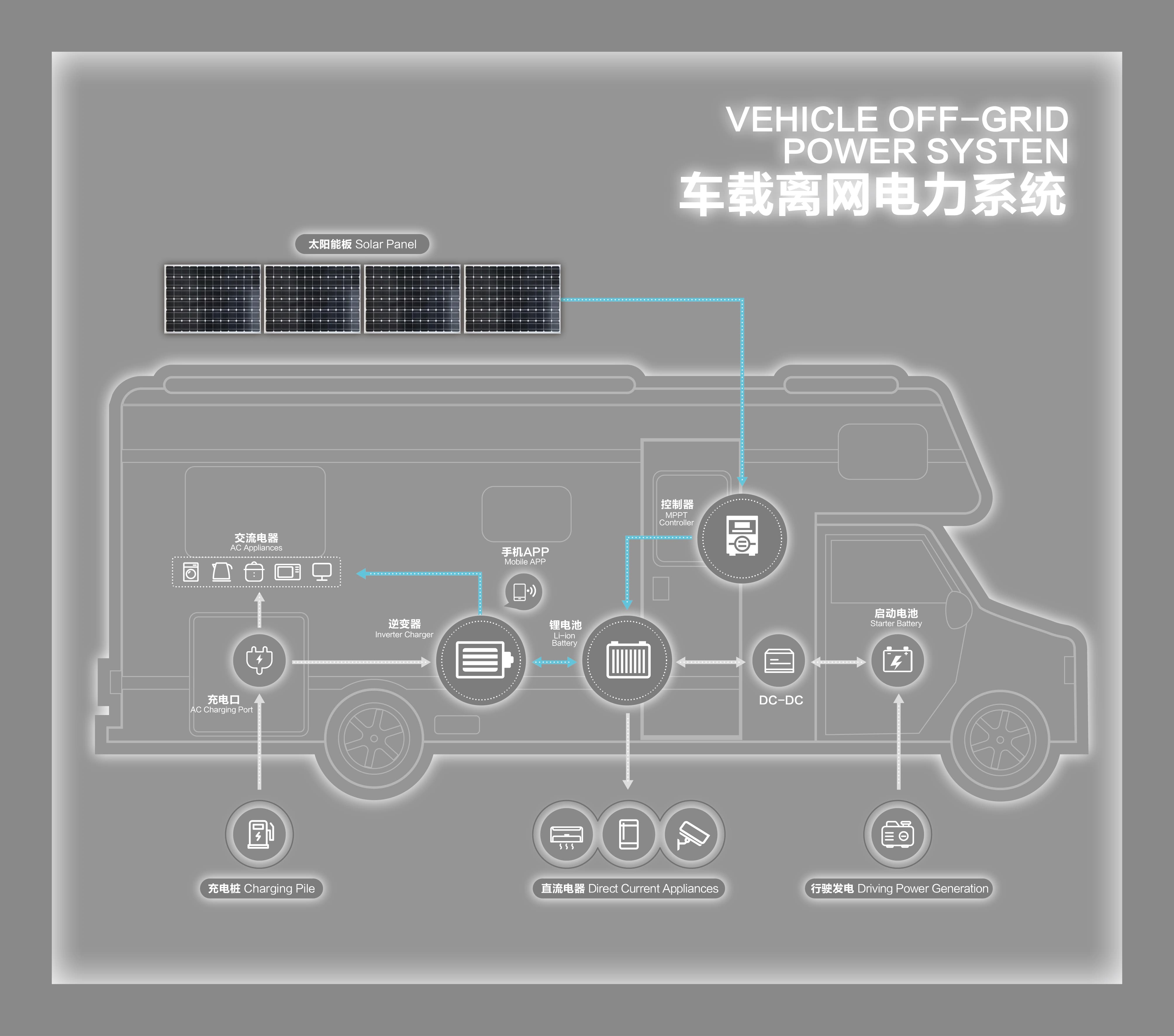
When designing or upgrading an RV electrical system, one question always comes up: Should you choose a 12V system or a 24V system?
Both are widely used in RVs today, but because their voltages differ, their performance, efficiency, and suitability can vary significantly depending on your RV size and power needs.
Let’s break down the real differences and help you make a smarter choice.
What’s the Difference Between a 12V System and a 24V System?
At the most basic level, the difference is voltage. Voltage is what pushes electrical current through a circuit. For the same power demand, lower voltage means higher current, and higher current leads to more heat, more resistance loss, and lower efficiency.
That single principle explains most of the practical differences between 12V and 24V RV systems.
12V System: The Traditional and Most Common Choice
The 12V electrical system is by far the most widely used system in RVs and vehicles. Cars, RVs, lighting systems, control units, and many everyday electronic devices are all designed around 12V.
Advantages of a 12V RV System
- Excellent compatibility
Most RV appliances—lighting, water pumps, fans, control panels, refrigerators, and ignition systems—are designed to run directly on 12V. - Wide availability of components
Batteries, chargers, appliances, and accessories are easy to find and usually cost less. - Compact battery size
12V batteries are generally smaller and easier to install, which is ideal for compact RVs with limited space. - Simple system design
No need for voltage converters in most setups.
Limitations of a 12V System
As RVs become more power-hungry, the weaknesses of 12V systems become more noticeable:
- Higher current at the same power level, which increases heat generation
- Greater resistance loss, reducing overall efficiency
- Thicker cables required, which adds weight and cost
- Less suitable for high-power inverters and large solar systems
For modern RVs packed with appliances, these drawbacks can add up quickly.
24V System: Higher Efficiency for Power-Demanding RVs
The 24V system is increasingly adopted in larger RVs, solar-equipped rigs, commercial vehicles, and marine applications. Many manufacturers are moving in this direction for good reason.
Advantages of a 24V RV System
- Lower current, higher efficiency
For the same power output, a 24V system carries half the current of a 12V system, significantly reducing heat and energy loss. - Lower wiring cost
Thinner cables can be used, saving weight, space, and money. - Better performance with inverters and motors
24V systems are more efficient and cost-effective for high-power inverters. - Ideal for solar and energy storage systems
Especially when paired with LiFePO4 batteries.
Limitations of a 24V System
- Lower compatibility with standard RV appliances
Most RV devices still operate on 12V. - Requires DC-DC converters
A step-down converter is needed to power 12V lighting, controls, and accessories. - Slightly more complex system design
Despite these limitations, many medium and large RV owners find the efficiency gains well worth it.
So, Which One Should You Choose?
There’s no universal answer. The right system depends on your RV size, power demand, and future plans.
Choose a 12V System If:
- You own a small or mid-size RV (Class B, camper van, pop-up, toy hauler)
- Your electrical load is modest
- You want simplicity and maximum compatibility
- Space and weight are major concerns
Choose a 24V System If:
- You own a large RV (Class A, fifth wheel)
- You use high-power appliances or large inverters
- You plan to install or expand a solar energy system
- Efficiency, reduced wiring losses, and scalability matter to you
In fact, some high-end RVs even move beyond 24V to 36V or 48V systems for maximum efficiency.
A Smarter Upgrade: 24V Systems with LiFePO4 Batteries
If you’re considering upgrading your RV’s electrical system, combining a 24V architecture with LiFePO4 (lithium iron phosphate) batteries is a strong option.
LiFePO4 batteries offer:
- High safety and thermal stability
- Long cycle life
- Stable voltage output
- Excellent compatibility with solar and inverter systems
This combination delivers better efficiency, reliability, and a noticeably improved RV power experience.
Conclusion
Neither a 12V nor a 24V system is “better” in all cases. Each has its own ideal use scenario. The key is understanding your RV’s actual power needs and planning for how you use your rig today—and how you might use it tomorrow.
If you’re building a modern, power-efficient RV electrical system, especially with solar and lithium batteries, a 24V system is increasingly becoming the preferred choice.
👉 Want to learn more about LiFePO4 battery solutions for RVs? Contact us or explore our product specifications to find the right system for your setup.
Popular Articles
Contact Details
Worktime :Monday to Friday 9am - 6pm (HKT)
WhatsApp/Wechat/Mobile :+8613645616165
Email : info@lifepo4cellstore.com