Blog
What’s the difference between Amp Hours (Ah) and Watt Hours (Wh)?
2025-09-29 | Eric
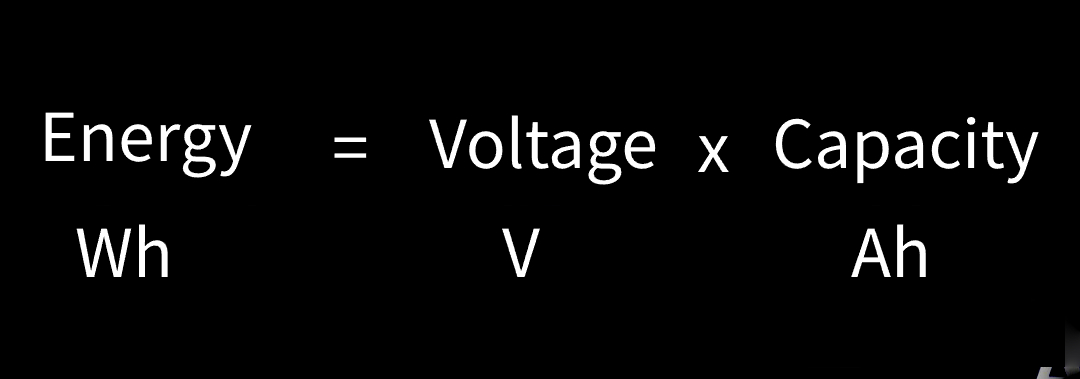
If you’re adding solar and batteries to your RV, boat or tiny home, knowing the difference between amp-hours and watt-hours will save you headaches — and nights without lights. In short: watt-hours measure energy (power × time), amp-hours measure electric charge (current × time). But let’s walk through what that actually means, how to convert between them, and how to size a battery system so you won’t run out of juice when you’re off the grid.
Watt-hours = power over time
A watt (W) is a unit of power — one joule per second. A watt-hour (Wh) is simply power used over time.
Formula:
Wh = watts × hours
Example: a 50 W light bulb used for 24 hours uses
50 × 24 = 1,200 Wh.
So that bulb consumes 1,200 watt-hours (or 1.2 kWh).
Amp-hours = current over time
An amp (A) measures current (the flow of charge). An amp-hour (Ah) tells you how many amps flow during one hour. It’s a measure of a battery’s charge capacity, not energy directly.
Example: a 150 Ah battery could, in theory, deliver 150 A for 1 hour, or 75 A for 2 hours — both equal 150 Ah of charge delivered.
Quick note on C-rate: a battery’s C rating tells you how fast it charges or discharges relative to its capacity.
- 1C on a 20 Ah battery = 20 A for 1 hour.
- 0.5C (C/2) = 10 A for 2 hours.
C-rates matter for sizing chargers, inverters and protecting battery life.
Converting between Wh and Ah (the crucial link)
Because Wh = watts × hours and watts = volts × amps, the conversion is:
- Wh = Ah × volts
- Ah = Wh ÷ volts
Example conversions:
- A 12 V battery rated 200 Ah → Wh = 200 × 12 = 2,400 Wh.
- A 12 V battery that stores 1,200 Wh → Ah = 1,200 ÷ 12 = 100 Ah.
This is why a 24 V, 100 Ah bank also gives 2,400 Wh: 24 × 100 = 2,400 Wh.
Why both numbers matter (and when to use each)
- Use Wh when you’re estimating energy use per day (how many watt-hours your devices draw).
- Use Ah when you’re planning battery banks and wiring at a specific system voltage (12 V, 24 V, etc.).
- Use C-rate and amps when sizing chargers, fuses and cables (current capacity).
Sizing a battery for real life — step-by-step
- List your loads: write each device and its watt rating, then estimate hours used per day.
- Calculate daily Wh for each device and sum them up → Daily energy need (Wh/day).
- Add system losses & safety margin (inverter losses, wiring, cloudy days). A common rule: add 20–30% for losses and some buffer.
- Pick battery voltage (12 V, 24 V, etc.). Higher voltage = lower currents, thinner wires.
- Decide usable depth-of-discharge (DoD). LFP batteries let you use far more of their capacity than lead-acid — often around 80–100% usable vs ~50% for flooded lead-acid.
- Account for inverter efficiency (if using AC loads). Typical inverters are roughly 85–95% efficient.
- Compute required battery Ah:
Required Ah = (Daily Wh × safety factor) ÷ (battery volts × usable DoD × inverter efficiency)
Example
Say you need 2,400 Wh/day (you already calculated device use). You choose a 12 V LFP bank, assume usable DoD 90% (0.9) and inverter efficiency 90% (0.9), and include only a small safety factor here (we’ll fold that into DoD and efficiency). Then:
- Step 1: volts × DoD × efficiency = 12 × 0.9 × 0.9
12 × 0.9 = 10.8
10.8 × 0.9 = 9.72 - Step 2: Required Ah = 2,400 ÷ 9.72 ≈ 246.9 Ah → round up → ≈ 247 Ah
So you’d aim for a ~250 Ah 12 V LFP bank to comfortably cover 2,400 Wh/day under those assumptions.
Practical tips & gotchas
- Don’t forget inverter standby and surge draws. Some appliances draw big surges on startup (fridges, pumps). Size inverter and battery wiring for those peaks.
- Batteries aren’t 100% efficient. Charging and discharging cause losses — factor them in.
- Higher system voltage reduces current. Doubling voltage halves current for the same power — which means smaller wire sizes and lower losses.
- LFP vs lead-acid: LFP usually gives you more usable energy per rated Ah and much longer cycle life — which means better value long term.
- Wire thickness and fuses should be sized based on expected current (amps), not Ah. Use Ah to figure capacity and amps for wiring/fuse specs.
Popular Articles
Contact Details
Worktime :Monday to Friday 9am - 6pm (HKT)
WhatsApp/Wechat/Mobile :+8613645616165
Email : info@lifepo4cellstore.com