Blog
What Is the Difference Between a Cell and a Battery? A Complete Guide
2025-11-22 | Eric
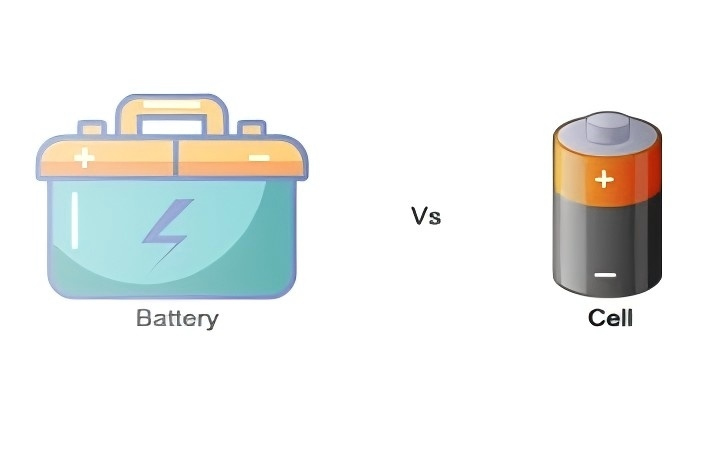
When it comes to powering everything from your smartphone to electric vehicles, we often hear the terms "cell" and "battery" used interchangeably. However, while they are closely related, they refer to different components of energy storage. Understanding the distinction between a cell and a battery is key to making informed choices for both everyday consumers and industry professionals. In this article, we’ll break down what each one is, their components, and most importantly, how they differ.
Table of Contents
- Part 1: What Is a Cell?
- Part 2: What Is a Battery?
- Part 3: Key Differences Between a Cell and a Battery
- Part 4: FAQs
Part 1: What Is a Cell?
A cell is the smallest unit in an energy storage system. It is a device that converts chemical energy into electrical energy, and can function on its own or as part of a larger battery system. Cells are the building blocks of all batteries, and understanding how they work is essential for anyone looking to understand energy storage on a deeper level.
Key Components of a Cell
- Anode: The electrode where current flows into the cell during discharge. It is made from a reactive material that undergoes oxidation.
- Cathode: The electrode where reduction occurs. This material readily accepts electrons during the discharge process.
- Electrolyte: A medium that allows ions to flow between the anode and cathode, facilitating the chemical reactions necessary for generating electricity.
- Separator: A physical barrier between the anode and cathode that prevents a short circuit while allowing ions to pass through.
Types of Cells
Cells can be broadly classified based on their composition and use. Here are some common types:
- Primary Cells: These are non-rechargeable cells, often found in disposable batteries for devices like remotes, flashlights, and clocks. Once the chemical reactants are used up, the cell cannot be recharged.
- Secondary Cells: Unlike primary cells, secondary cells are rechargeable. They are used in devices such as smartphones, laptops, and electric vehicles because they can be recharged and reused multiple times.
- Alkaline Cells: Known for their long shelf life and stable voltage, these cells are widely used in household devices.
- Lithium-Ion Cells: Popular for their high energy density, lightweight construction, and long charge retention, lithium-ion cells are found in everything from portable electronics to electric vehicles.
Part 2: What Is a Battery?
A battery is an energy storage unit composed of multiple cells connected in series or parallel to provide higher voltage or greater capacity. While a single cell can provide energy, a battery can generate and store much more, making it suitable for higher-demand applications like automotive power, portable electronics, and renewable energy storage.
Key Components of a Battery
- Cells: A battery is made up of multiple interconnected cells (often referred to as "battery cells").
- Terminals: These are the points of connection between the battery and external devices, allowing the current to flow in and out.
- Casing: The outer casing provides structural integrity and protection for the cells and internal components.
- Battery Management System (BMS): In modern rechargeable batteries (such as those used in electric vehicles), a BMS helps monitor temperature, voltage levels, and charge cycles to ensure the battery operates efficiently and safely.
Types of Batteries
There are several types of batteries, each suited for different applications:
- Lithium-Ion Batteries: These batteries offer high energy density, are rechargeable, and are widely used in consumer electronics and electric vehicles due to their long lifespan and efficiency.
- Lead-Acid Batteries: A traditional technology, lead-acid batteries are commonly found in automotive applications and backup power systems.
- Nickel-Cadmium Batteries: Known for their reliability and long cycle life, these batteries are used in power tools and emergency lighting.
- Nickel-Metal Hydride Batteries: Offering higher energy density than nickel-cadmium batteries, these are often used in consumer electronics such as digital cameras and laptops.
Part 3: Key Differences Between a Cell and a Battery
Understanding the fundamental differences between a cell and a battery can help you choose the right power source for your needs. Here are the key distinctions:
- Composition: A cell consists of one unit, while a battery is made up of multiple cells connected together.
- Functionality: A cell can function independently, while a battery requires multiple cells to work together to provide the necessary voltage and current.
- Voltage and Capacity: Cells generally have a lower voltage and capacity, while batteries provide higher output by combining multiple cells in series or parallel configurations.
- Applications: Cells are commonly used in low-power devices like flashlights and remote controls, while batteries power high-demand systems like electric cars and backup power supplies.
- Form Factors: Cells tend to be small and compact, while batteries come in a wide range of sizes and shapes (cylindrical, prismatic, and pouch forms).
- Energy Density: Batteries generally have higher energy density compared to single cells, allowing them to store more power for extended use.
- Rechargeability: Many cells are rechargeable, but batteries are almost always rechargeable, especially those used in modern applications.
- Complexity: Batteries are more complex systems, requiring additional circuitry and management systems (such as BMS) to ensure optimal performance and safety.
Part 4: Frequently Asked Questions (FAQs)
1. Can I use a cell as a battery?
While a cell can function independently, a battery requires multiple cells to provide the power needed for more demanding devices. You can think of a cell as a single "unit" of a battery.
2. What are the advantages of lithium-ion cells over traditional lead-acid cells?
Lithium-ion cells are lighter, have a higher energy density, last longer, and offer faster recharge times compared to lead-acid cells. They’re also more environmentally friendly in the long run.
3. How do I know if my device needs a cell or a battery?
Devices that require small amounts of power for short periods typically use individual cells (like flashlights or remote controls). On the other hand, devices with higher power demands, such as electric vehicles or smartphones, require a battery made up of multiple cells.
Popular Articles
Contact Details
Worktime :Monday to Friday 9am - 6pm (HKT)
WhatsApp/Wechat/Mobile :+8613645616165
Email : info@lifepo4cellstore.com