Blog
Everything You Need to Know About Energy Storage
2026-02-14 | Eric
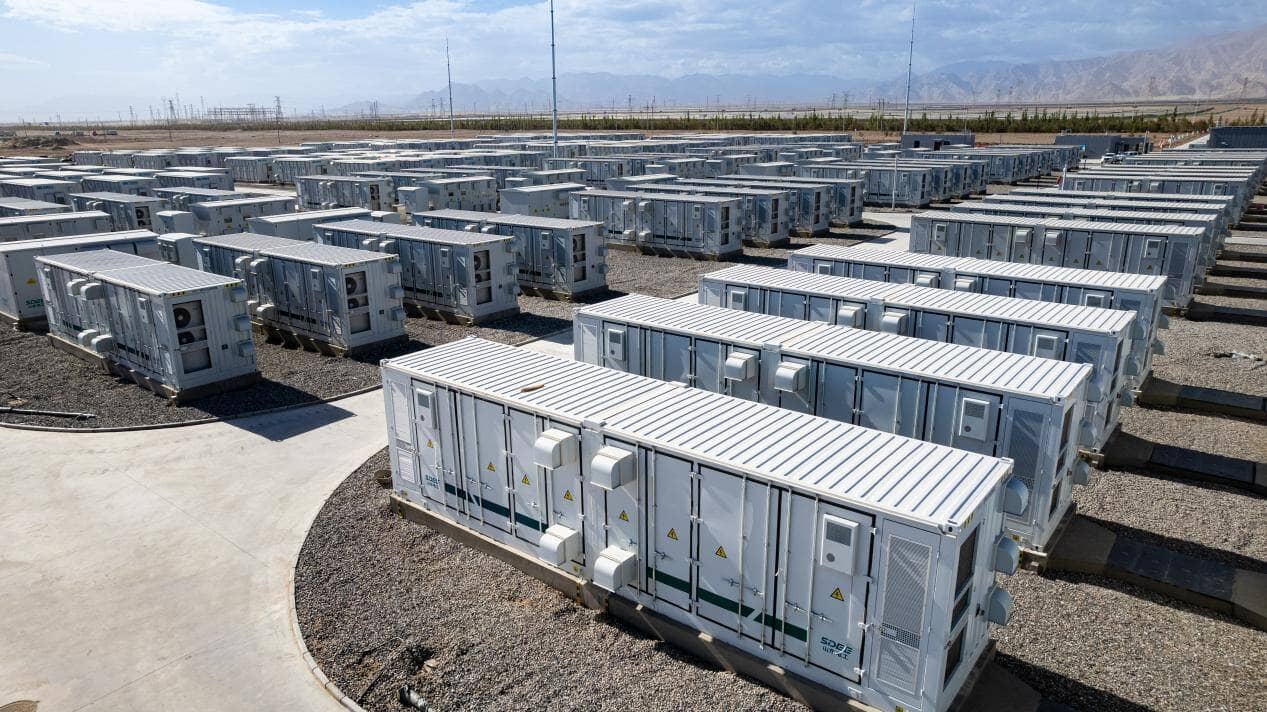
Energy storage, as the "power bank" of the energy system, is one of the core technologies that support the large-scale application of renewable energy, enhance grid flexibility, and ensure energy security. The following is an overview of the essential knowledge in the energy storage field, covering six main dimensions: basic concepts, mainstream technologies, key metrics, application scenarios, policies & market, and challenges & trends.
1. Basic Concepts: The Essence and Core Value of Energy Storage
Energy storage (Energy Storage) is the process of storing energy in a specific form using devices or media and releasing it when needed. Its core value lies in solving the problem of "time mismatch in energy supply and demand":
- Time Mismatch: For instance, solar power generation is abundant during the day but less at night, and wind power fluctuates based on wind speed.
- Spatial Mismatch: Wind and solar resources are abundant in the western regions, but the electricity demand is low, while demand is high in the eastern regions, but resources are scarce.
- System Stability: By rapidly charging and discharging, energy storage helps smooth out grid fluctuations (such as frequency regulation and voltage control), improving the reliability of power supply.
2. Mainstream Energy Storage Technologies: Classification, Principles, and Characteristics
Energy storage technologies can be classified into four major types based on energy conversion methods, each with applicable scenarios:
1. Physical Energy Storage (Mechanical Energy/Gravitational Potential Energy/Thermal Energy)
- Pumped Storage Hydropower (PSH): The most mature large-scale energy storage technology (accounting for over 80% of global installed capacity). Water is pumped to a high-level reservoir during low electricity demand and released to generate electricity during peak demand.
- Compressed Air Energy Storage (CAES): Uses a compressor to store air in underground caverns or storage tanks, which is then expanded by heating to drive turbines for power generation.
- Flywheel Energy Storage: Stores kinetic energy in a high-speed rotating flywheel, with energy conversion through a motor-generator.
2. Electrochemical Energy Storage (Electrochemical Reactions)
- Lithium-Ion Batteries (LIB): The most common electrochemical storage technology (accounting for over 90% of global new storage). Lithium ions migrate between positive and negative electrodes during charge and discharge.
- Lead-Acid Batteries: A mature technology with low cost but lower energy density, used in low-speed vehicles and backup power systems.
- Flow Batteries (VRB): Liquid electrolyte stored in external tanks circulates to the cell stack for reaction.
3. Electromagnetic Energy Storage (Electric Field/Magnetic Field)
- Supercapacitors (SC): Store charge through double electric layers or Faradaic pseudocapacitance, with high power density but low energy density, used for short-term high-power applications.
- Superconducting Magnetic Energy Storage (SMES): Uses superconducting coils to store energy in a strong magnetic field, efficient but requiring low-temperature environments and high costs.
4. Thermal Energy Storage
- Sensible Heat Storage: Stores heat through temperature changes in materials (e.g., water, molten salts), such as in solar thermal power stations.
- Latent Heat Storage: Uses phase-change materials (e.g., ice, paraffin) to absorb or release heat during phase transitions, with higher efficiency than sensible heat storage.
- Chemical Heat Storage: Stores heat through reversible chemical reactions (e.g., metal hydride decomposition/synthesis), with the highest theoretical efficiency but still under development.
3. Key Metrics: Core Parameters for Evaluating Energy Storage Systems
- Energy Density (Wh/kg or Wh/L): Energy stored per unit mass/volume, determining the system's size and weight (e.g., Li-ion > Flow Batteries > Lead-acid).
- Power Density (W/kg): Output power per unit mass/volume, determining the charging and discharging speed (e.g., Flywheel > Supercapacitors > Li-ion).
- Efficiency (%): The ratio of energy input to energy output (e.g., Li-ion > 90%, Flow > 75%, PSH > 70%).
- Cycling Life (Cycles): The number of full charge-discharge cycles before the capacity drops to 80% (e.g., Flow > 10,000 cycles, Li-ion 2000~6000 cycles, Lead-acid < 2000 cycles).
- Self-Discharge Rate (%/month): The rate at which energy is naturally lost during storage (e.g., Lead-acid > 5%, Li-ion < 2%, Flow < 1%).
- Cost (CNY/Wh): Initial investment (equipment + installation) or levelized cost of storage (LCOS), accounting for lifetime and efficiency.
4. Application Scenarios: Where Energy Storage Plays a Role
The value of energy storage depends on specific scenarios, with core applications including:
- Power Generation Side (Supporting Power Generation): Storage for smoothing fluctuations in solar and wind power, improving the integration of renewable energy.
- Grid Side (Supporting Power Systems): Peak shaving, frequency regulation, black start, and grid stability applications.
- User Side (Optimizing End-Use): Peak shaving for industrial/commercial applications and residential energy storage.
5. Policies and Market: Key Factors Driving Energy Storage Development
Energy storage policies and market dynamics are key drivers for its development:
- China: The 2021 "Guiding Opinions on Accelerating the Development of New Energy Storage" sets a target of 30GW installed capacity by 2025.
- USA: Federal ITC tax credit and state-level mandates, such as California's 11GW target for energy storage by 2030.
- Europe: REPowerEU plans and national policies accelerating storage deployment, with Germany simplifying grid connection processes.
6. Challenges and Trends: Future Key Breakthrough Directions
Energy storage faces challenges such as safety concerns, cost pressures, and technical bottlenecks. However, the future holds opportunities for breakthroughs in:
- Diversified Technological Routes: The rise of sodium-ion and solid-state batteries, with lithium-ion dominating short-term storage.
- Intelligent Management: AI algorithms for optimized charge/discharge strategies, and digital twin technologies for monitoring battery health.
- Large-Scale and Standardized Deployment: Large-scale storage stations and improving industry standards.
Conclusion
Energy storage is a "must-have" for the energy revolution. Its technological selection must be based on time and power demands, and system requirements (short-term/long-term, high/low power). In the future, with advances in technology and policy improvements, energy storage will shift from "optional" to "essential," deeply integrated into the new power system.
Popular Articles
Contact Details
Worktime :Monday to Friday 9am - 6pm (HKT)
WhatsApp/Wechat/Mobile :+8613645616165
Email : info@lifepo4cellstore.com