Blog
What Is an Energy Storage EMS?
2026-02-20 | Eric
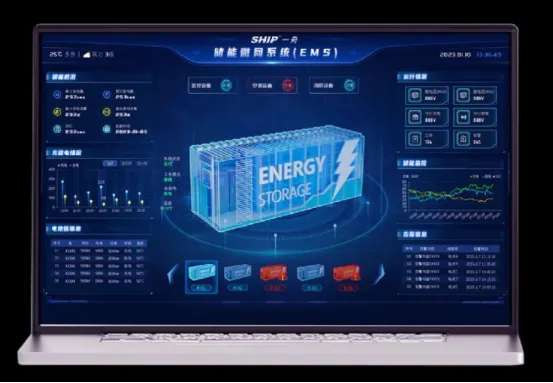
An Energy Storage EMS (Energy Management System) is an intelligent software and hardware system that integrates monitoring, control, analysis, and optimization, specifically designed for managing energy systems. By collecting data from energy storage system equipment (such as PCS, BMS, power meters, fire protection systems, and HVAC systems), performing data analysis and visualization, and executing energy dispatching, the EMS ensures the orderly and stable operation of the entire energy storage system.
In simple terms, an EMS is like a smart brain that controls and manages stored electricity. Imagine your phone battery as the energy storage device, and the EMS as the intelligent assistant that decides when to charge and when to discharge.
How Energy Storage EMS Works
The EMS collects real-time data from the energy storage system, including key parameters such as the battery’s State of Charge (SOC), State of Health (SOH), ambient temperature, charge/discharge current, and voltage. Using advanced algorithms, it processes and analyzes this data for optimization.
Based on the collected data and analytical results, the EMS enables intelligent control of energy storage equipment, including optimizing charge/discharge strategies, conducting fault diagnosis and maintenance, and communicating and interacting with other systems.
Energy Storage EMS System Architecture
An Energy Management System is generally divided into four layers: device layer, communication layer, information layer, and application layer.
- Device Layer: Supported by energy acquisition and conversion equipment (PCS, BMS).
- Communication Layer: Includes communication links, protocols, and data transmission.
- Information Layer: Includes caching middleware, databases, and servers.
- Application Layer: Includes APPs and web platforms that provide visual monitoring and operational interfaces for managers.
Energy Storage EMS Network Architecture
The EMS communication topology in an energy storage system consists of a two-layer structure:
- Top Layer: Centralized monitoring system.
- Bottom Layer: Connected devices, including power conversion systems (PCS), battery management systems (BMS), environmental monitoring equipment, fire protection systems, air conditioning systems, or access control systems.
Responsibilities of the Monitoring Host
- Network connection and data conversion between on-site measurement and control systems.
- Data acquisition, local data processing, and protocol conversion.
- Command exchange and local user interface monitoring operations.
- Implementation of control strategies and web server functions.
- High-speed aggregation and transmission of large volumes of real-time data to ensure the master station system can quickly and accurately obtain all monitoring information.
- Timely feedback on network-detected system abnormalities and faults to ensure rapid fault localization and recovery.
Main Functions of Energy Storage EMS
Monitoring and Control
- Real-time monitoring of system operating status, including battery charge/discharge state, temperature, voltage, and current.
- Control of the Power Conversion System (PCS) for charging and discharging to maintain optimal battery performance.
Optimized Scheduling
Optimizes charging and discharging strategies based on grid demand, battery status, and cost factors to improve energy efficiency and reduce operational costs.
State Estimation and Performance Evaluation
- Estimates battery conditions using advanced algorithms, including remaining capacity and health status.
- Evaluates battery performance to support optimized charging and discharging strategies.
Safety Management
Includes comprehensive safety protection measures such as over-temperature protection, overcharge protection, over-discharge protection, and battery balancing management to prevent battery damage or safety incidents.
Data Acquisition and Analysis
Collects operational data from the energy storage system for analysis and processing to identify performance trends and support system optimization and maintenance.
Communication and Interfaces
Communicates with other systems (such as grid dispatch systems and distributed energy management systems), executes remote control commands, and enables interaction with external systems.
Energy Forecasting and Planning
Predicts grid load and renewable energy generation based on historical data and weather forecasts, enabling strategic planning of energy storage operations.
Ancillary Services
Coordinates the energy storage system to provide ancillary services such as frequency regulation and voltage control to support stable grid operation.
Economic Operation
Optimizes system operating modes by analyzing market prices and grid demand to maximize economic benefits.
Fault Diagnosis and Maintenance
Monitors abnormalities in batteries and systems, provides diagnostic reports, assists maintenance personnel in resolving issues promptly, and predicts maintenance schedules.
Application Areas of Energy Storage EMS
Grid Ancillary Services
EMS can regulate grid frequency and voltage, provide backup power, and participate in frequency regulation and demand response programs.
Renewable Energy Integration
EMS helps integrate renewable energy sources such as wind and solar power by storing surplus energy and releasing it during peak demand periods, thereby improving renewable energy utilization.
Peak Shaving and Valley Filling
EMS assists grid operators in balancing grid load by storing electricity during off-peak periods and releasing it during peak periods, reducing peak loads and minimizing energy waste.
Demand Response
EMS responds to grid demand reduction signals by adjusting charging and discharging behavior, helping reduce grid load and electricity costs.
Microgrid Management
In microgrid applications, EMS manages multiple energy resources, including battery storage, fuel cells, and thermal energy storage, achieving optimized allocation and autonomous management.
Electric Vehicle Charging Control
EMS manages EV charging stations by scheduling charging times and power levels, optimizing grid load while meeting vehicle charging requirements.
Industrial and Commercial Energy Storage
In industrial and commercial buildings, EMS optimizes stored electricity usage, reduces electricity expenses, improves power quality, and enhances grid stability through demand-side management.
Off-Grid Energy Systems
In off-grid renewable energy systems, EMS optimizes charging and discharging strategies to improve energy self-sufficiency and extend independent operation time.
Battery Performance Management
EMS monitors battery health and performance, using intelligent algorithms to extend battery lifespan and reduce maintenance costs.
Energy Trading
EMS provides grid operation data and market information to help energy traders make informed decisions and participate in energy market transactions.
Development Trends of Energy Storage EMS
With technological advancements, Energy Storage EMS is evolving toward greater intelligence, integration, and sustainability. Future EMS solutions will increasingly incorporate intelligent technologies such as artificial intelligence and machine learning to achieve more precise data analysis and forecasting.
At the same time, EMS will focus more on integration and interoperability with other smart devices, as well as promoting clean energy adoption and energy-saving policies. The development of Energy Storage EMS is influenced by multiple factors, including technological progress, market demand, and policy support.
Emerging technologies such as artificial intelligence and big data will further enhance EMS capabilities in proactive safety warnings, intelligent trading, and fault information processing, ultimately enabling the “smart” operation of energy storage power plants.
Popular Articles
Contact Details
Worktime :Monday to Friday 9am - 6pm (HKT)
WhatsApp/Wechat/Mobile :+8613645616165
Email : info@lifepo4cellstore.com