Blog
How Do I Calculate the LiFePO4 Battery Capacity I Need?
2026-01-07 | Eric
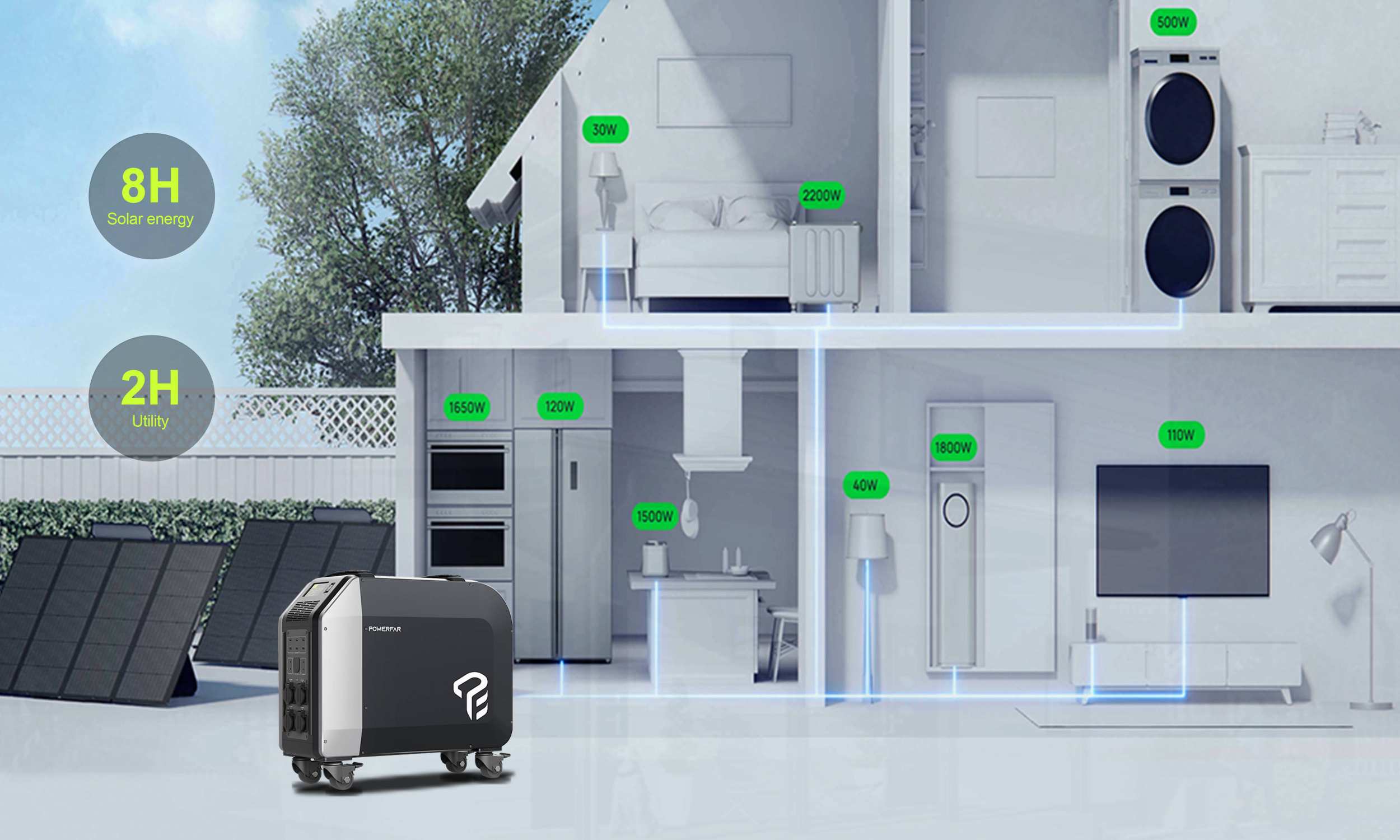
When purchasing a LiFePO4 battery, one question always comes up sooner or later: how much battery capacity do I actually need? With so many brands, voltages, and capacities on the market, choosing the right LiFePO4 battery can feel confusing. Bigger isn’t always better, and undersizing leads to frustration.
So let’s break it down in a clear, practical way.
Understanding LiFePO4 Battery Capacity Basics
LiFePO4 batteries use a nominal voltage of 3.2V per cell, and total battery energy is calculated as:
Energy (Wh) = Voltage (V) × Capacity (Ah)
In real-world applications, capacity is usually expressed in kilowatt-hours (kWh), which directly matches how electricity consumption is measured. That makes capacity planning much easier.
How to Calculate LiFePO4 Battery Capacity for Home Energy Storage
Home energy storage is one of the most common and practical uses for LiFePO4 batteries. Compared with lead-acid batteries or fuel generators, LiFePO4 systems offer:
- Longer lifespan (often 10+ years)
- Higher usable capacity
- Better safety and stability
- Lower long-term cost
There are two reliable ways to calculate the capacity you need.
Method 1: Use Your Electricity Bill (Simplest)
Your electricity bill already tells you how much energy your home consumes, measured in kWh. Utility companies calculate usage very accurately—usually more accurately than manual estimates.
How to use this method:
- Check your monthly kWh consumption
- Decide how much of that usage you want to back up (full home or partial loads)
This method works well if:
- You want whole-home backup
- You don’t need to isolate individual appliances
Limitation:
It doesn’t show which appliances consume the most power,
so it’s less suitable for partial or selective backup systems.
Method 2: Calculate by Appliance Nameplate (More Precise)
Most appliances list their rated power (W) on a nameplate or label.
Calculation formula:
Energy (Wh) = Power (W) × Usage Time (hours)
Steps:
- List appliances you plan to power
- Note each appliance’s power rating
- Estimate daily runtime
- Add everything together
This method is ideal for:
- Partial home backup
- Off-grid cabins
- Solar + battery systems
- Users who want precise control
It does take more effort, but the result is far more accurate.
Don’t Forget Depth of Discharge (DOD)
Most LiFePO4 batteries recommend around 80% DOD to maximize lifespan.
What this means in practice:
- If you need 5 kWh of usable energy
- You should install about 6–6.5 kWh of battery capacity
Some manufacturers clearly state 100% DOD support. In that case, oversizing may not be necessary—but always confirm this in the technical datasheet.
Calculating LiFePO4 Battery Capacity for Other Applications
LiFePO4 batteries are widely used beyond home storage, including:
- RVs
- Marine vessels
- Electric vehicles
- E-bikes and scooters
- Telecom base stations
- DIY and industrial equipment
The calculation logic stays mostly the same, but there are some practical differences.
RV Applications
Many RVs still use lead-acid batteries, mainly due to cost and legacy design. If you’re upgrading:
- Lead-acid batteries operate at 2.1V per cell
- Typically only 50% DOD is usable
When replacing lead-acid with LiFePO4:
- You often need less nominal capacity for the same usable energy
- A simple conversion prevents over-sizing and wasted cost
If you plan to power additional appliances, then appliance-based calculation is recommended.
Marine Applications
Marine systems follow similar rules to RVs, but one factor is critical:
Waterproofing and corrosion protection are mandatory.
LiFePO4 batteries should be installed in sealed, marine-rated enclosures.
Space-Limited Applications (E-Bikes, Scooters, Compact Systems)
In compact systems:
- Large single cells may not fit physically
- Multiple smaller LiFePO4 cells are often connected into battery packs
Here, capacity must be balanced with:
- Physical size
- Weight
- Required runtime
This is also why lead-acid batteries cannot always be replaced one-to-one in these scenarios.
Final Thoughts: Choose Capacity Rationally
Calculating LiFePO4 battery capacity can be simple—or very detailed—depending on how precise you want to be. The real challenge is that loads change over time.
Not every appliance needs to run during every power outage. Over-sizing leads to unnecessary cost and unused energy, while under-sizing limits reliability.
The smartest approach:
- Identify critical loads
- Plan for realistic usage scenarios
- Add reasonable safety margins, not excess
A calm, realistic calculation will always outperform guessing—or blindly buying the largest battery available.
Popular Articles
Contact Details
Worktime :Monday to Friday 9am - 6pm (HKT)
WhatsApp/Wechat/Mobile :+8613645616165
Email : info@lifepo4cellstore.com