Blog
What is the charging principle of Lithium ion battery?
2025-12-14 | Eric
Lithium-ion batteries are integral to modern technology, powering everything from smartphones and laptops to electric vehicles and renewable energy storage systems. Understanding the fundamental principles of how these batteries charge is crucial for users and businesses alike. In this article, we will explore how lithium-ion battery charging works, the key factors affecting its performance, and why proper charging practices are essential for battery longevity.
What Is the Principle Behind Lithium-Ion Battery Charging?
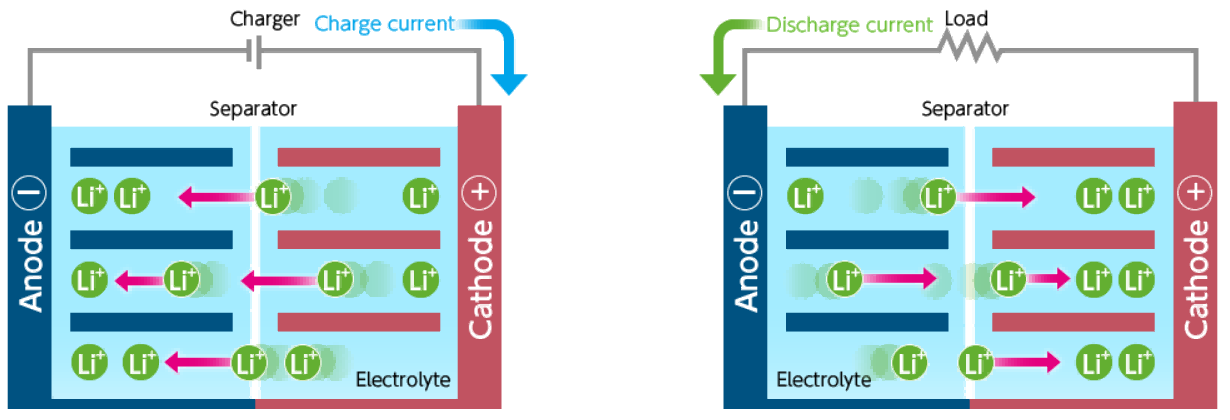
Lithium-ion batteries operate on a simple yet efficient principle of charging and discharging through the movement of lithium ions between two electrodes: the positive electrode (cathode) and the negative electrode (anode). This process, known as intercalation, is essential to understanding how these batteries work.
- Charging Process: During charging, lithium ions (Li⁺) are de-embedded from the cathode and move through the electrolyte toward the anode, where they are stored in the microscopic pores of the anode material (usually graphite). The more lithium ions embedded in the anode, the higher the battery’s energy storage capacity.
- Discharging Process: When discharging (i.e., when the battery is in use), the lithium ions embedded in the anode move back to the cathode, releasing energy that powers the device. The more lithium ions that can be released during discharging, the greater the battery’s capacity to deliver energy.
The Stages of Lithium-Ion Battery Charging
For efficient and safe battery charging, the process is typically divided into four stages:
- Trickle Charge (Low Voltage Pre-Charge): At the beginning of the charging process, the battery is charged at a low voltage to prevent damage from sudden voltage spikes.
- Constant Current Charge: Once the battery voltage rises, the charging current is kept constant, allowing the battery to charge efficiently without overheating.
- Constant Voltage Charge: When the battery approaches its full charge, the charging voltage is held steady, and the charging current gradually decreases.
- Charge Termination: Charging is complete when the current drops to a preset level, and the battery is fully charged.
This multi-stage process is crucial for maximizing battery life and preventing overheating or overcharging, which can degrade performance or cause damage.
Why Charging Current Matters: What Is the Ideal Charging Rate?
The charging current is one of the most critical factors that determine how quickly and efficiently a lithium-ion battery charges. Charging too quickly or too slowly can impact both battery performance and longevity.
- Maximum Charging Current: Most lithium-ion batteries can handle a maximum charge rate of up to 1C, where "C" refers to the battery's capacity. For example, a 1500mAh battery can safely be charged with a current of 1.5A (1C) over the course of one hour. However, for extended battery life, a slower charging rate of 0.1C to 0.3C (approximately 150mA to 450mA for the same 1500mAh battery) is often recommended, which results in a longer charging time but better overall battery health.
- Laptop Batteries: These typically charge at rates around 0.9C, which is slightly below the maximum charge rate. This ensures that the battery stays within safe thermal limits while still providing reasonable charging times.
- Lithium Iron Phosphate Batteries: These batteries, often used in power applications like electric vehicles, can tolerate higher charging currents (up to 1C or even 15C). However, rapid charging still generates heat and can reduce lifespan if not managed properly.
Charging too quickly can cause excessive heat, which accelerates the aging of the battery and can lead to reduced capacity over time. In contrast, a slower, more controlled charge maintains battery health, ensuring a longer operational lifespan.
The Impact of Voltage and Current on Lithium-Ion Battery Life
Lithium-ion batteries are designed to work within specific voltage and current ranges to maximize efficiency and minimize wear. For example, charging a 100Ah battery with a current range of 20A to 100A (0.2C to 1C) ensures that the battery operates within its safe charging limits, preventing overheating and excessive stress.
It’s essential to consider that the charging rate should align with the manufacturer’s specifications. Charging outside the recommended parameters (either too fast or with too high a current) can cause:
- Overheating: This increases the risk of thermal runaway, a dangerous condition that can lead to fire or explosion.
- Reduced Cycle Life: Rapid charging can reduce the total number of charge/discharge cycles a battery can go through before it starts losing capacity.
- Capacity Loss: Charging too quickly may prevent the battery from reaching its full potential, as electrochemical reactions take time and cannot occur efficiently at high speeds.
Best Practices for Charging Lithium-Ion Batteries
To ensure the optimal performance and lifespan of your lithium-ion battery, follow these best practices:
- Avoid Overcharging: Disconnect the battery once it’s fully charged to prevent it from staying in a charged state for too long.
- Charge Slowly When Possible: Use a lower charging current (such as 0.1C to 0.3C) to improve battery lifespan.
- Maintain Optimal Temperature: Charge your battery in a cool environment. Overheating is one of the biggest factors in reducing battery life.
- Use Quality Chargers: Always use chargers that are designed for your battery’s specifications to ensure safe and efficient charging.
Conclusion
Understanding the principles of lithium-ion battery charging helps ensure safe, efficient use of your devices and extends the lifespan of the battery. By following proper charging protocols, such as controlling the charging current, monitoring temperature, and using appropriate chargers, you can maintain optimal battery performance.
Popular Articles
Contact Details
Worktime :Monday to Friday 9am - 6pm (HKT)
WhatsApp/Wechat/Mobile :+8613645616165
Email : info@lifepo4cellstore.com