News
The Industrial Accelerator Act Takes Center Stage: A Lifeline or a Double-Edged Sword for the EU Battery Industry?
2026-05-26 | Eric
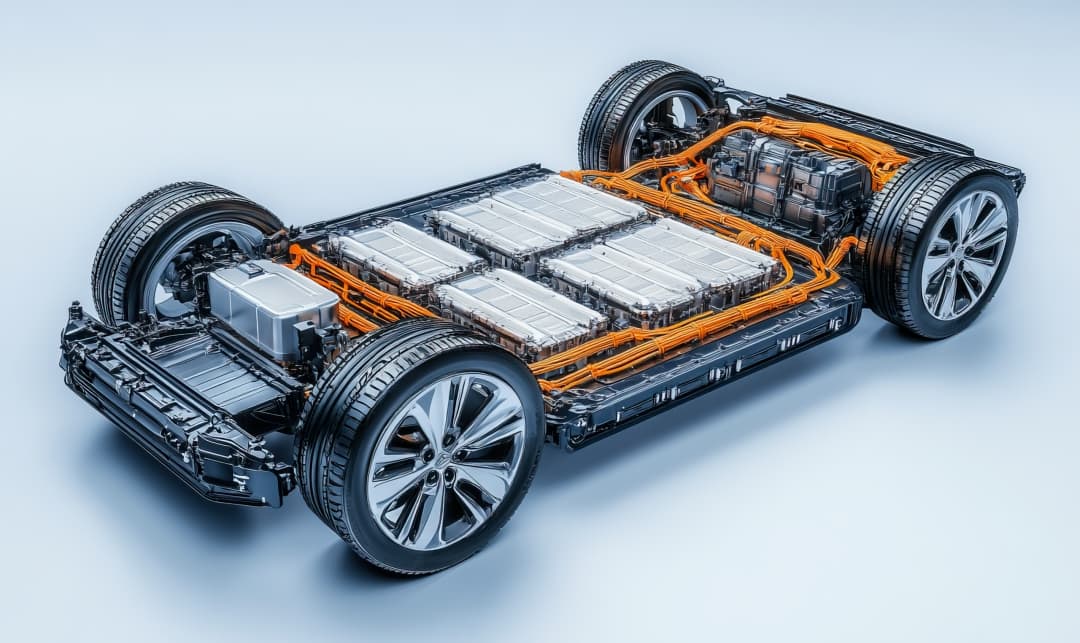
Europe’s battery manufacturing industry is going through a life-and-death struggle.
The sudden collapse of battery giant Northvolt, project delays at ACC (a battery joint venture formed by Stellantis, TotalEnergies, and Mercedes-Benz) and Cellforce (Porsche’s battery manufacturing subsidiary), and Volvo Group’s reduced battery investments—all signal repeated setbacks to what was once hailed as the “European battery dream.” Bankruptcies of gigafactories, project postponements, and supplier failures have further weakened the EU’s already fragile battery supply chain.
At a time when doubts are growing over whether Europe can achieve self-sufficiency in power batteries, a major industrial policy—the Industrial Accelerator Act (IAA)—has been brought to the forefront. It is becoming the EU’s central tool for stabilizing the situation and reshaping its battery manufacturing landscape.
The IAA was proposed by the European Commission in early March 2026 and is currently under review by the European Parliament and the Council of the European Union. The key question is whether it will become a lifeline for Europe’s battery industry or an expensive experiment in protectionism. A recent in-depth assessment by S&P Global Mobility suggests that the act represents both a challenge and an opportunity.
A Policy Toolkit Built Around “EU First” Principles
The IAA focuses primarily on public procurement and foreign investment. Through tools such as procurement preferences, restrictions on foreign investment, and mandatory technology transfer requirements, it aims to reshape market competition, mitigate external risks, and rebuild domestic manufacturing capabilities. The act consists of six chapters, 36 articles, and four annexes, with the goal of increasing manufacturing’s share of EU GDP to 20% by 2035.
For electric vehicle battery cells and key components, the IAA introduces strict “Made in the EU” requirements with a strong localization bias. Its core logic can be summarized as: if EU funds are used, EU-made batteries must be used. Several binding requirements are proposed:
Local content requirements: Electric vehicles sold in the EU (including battery electric vehicles, plug-in hybrids, and fuel cell vehicles) must, in order to qualify for EU public procurement or financial incentives, contain batteries with at least three key components originating in the EU (including the battery itself). After a three-year transition period, the threshold increases to at least five core components, such as battery cells, cathode materials, and battery management systems.
Linking procurement and subsidies: Government tenders and subsidy programs must prioritize electric vehicles and battery systems that meet “Made in the EU” standards.
Tighter scrutiny of foreign investment: Battery manufacturing is classified as an emerging strategic sector. Investments from countries accounting for more than 40% of global battery capacity (primarily China), if exceeding €100 million, must meet at least four out of six conditions—such as joint ventures, technology transfer, R&D commitments, and local employment—before approval can be granted.
Given Europe’s higher cost base and fragmented implementation structure, S&P Global Mobility notes that it remains uncertain whether these measures will deliver the intended success or simply result in costly protectionism.
Affordable Electric Vehicles May Be the Most Affected
The most significant impact of the act is expected not in premium vehicles, but in entry-level A-segment and B-segment electric cars. This is because the EU’s “super credit” incentives for small vehicles are directly tied to local sourcing compliance. As a result, affordable EVs that previously relied on Chinese lithium iron phosphate batteries (LFP batteries) to reduce costs may be forced to switch to EU-sourced battery cells.
This creates a structural mismatch. On one hand, Europe’s existing battery capacity is primarily built around nickel-manganese-cobalt (NMC) chemistries, while low-cost, safer LFP batteries have very limited domestic production. On the other hand, research estimates suggest that if automakers are forced to adopt European-produced NMC batteries, pack costs could rise by nearly 20%. For entry-level EVs, which already operate on thin margins, this would be extremely difficult to absorb. Some analysts argue that this could slow the rollout of affordable EVs and unintentionally undermine Europe’s own electrification strategy—a potential side effect that policymakers may not have fully anticipated.
Continued Expansion of Battery Manufacturing
Despite setbacks, Europe’s battery manufacturing sector continues to advance. Several new large-scale factory projects are in planning, including a 50 GWh facility planned by CATL in Spain (expected to begin production in 2028), and a 20 GWh plant by Volkswagen’s PowerCo in the same country (expected in 2027). In addition, Chinese companies such as CALB and EVE Energy are also expanding their footprint in Europe.
While the final impact of the IAA on these investments will depend on detailed implementation rules, facilities that meet local content requirements and foreign investment conditions may be eligible for “Made in the EU” incentives once operating within the bloc.
S&P Global Mobility expects Europe to build a strong EV battery manufacturing base, reaching nearly 950 GWh of capacity by 2030, with a compound annual growth rate of 31% between 2025 and 2030.
It is important to note that the final details of the IAA are still under negotiation. Key provisions—including eligibility criteria, definitions of “EU content,” and enforcement timelines—will be further clarified through delegated legislation. The act may be rolled out in phases around 2027, and enforcement differences between member states are also likely.
Implications for China’s Battery Industry
For China’s power battery industry, the IAA presents both challenges and opportunities. In the short term, it will significantly raise compliance barriers and investment costs for Chinese firms in Europe, particularly in the low-end vehicle segment. In the long term, however, it may accelerate a strategic shift from exporting products to exporting entire industrial ecosystems. Within the EU’s regulatory framework, deeper localization, joint ventures, and the export of technical standards will likely become necessary paths forward.
The IAA sends a clear signal: Europe is no longer satisfied with global division of labor. It aims to build, on its own terms, a resilient and controllable battery supply chain.
Popular Articles
Contact Details
Worktime : Monday to Friday 9am - 6pm (HKT)
WhatsApp/Wechat/Mobile : +8613645616165
Email : info@lifepo4cellstore.com