News
Sunwoda Launches Full-Line Marine Battery "SAIL" Solution
2026-05-20 | Eric
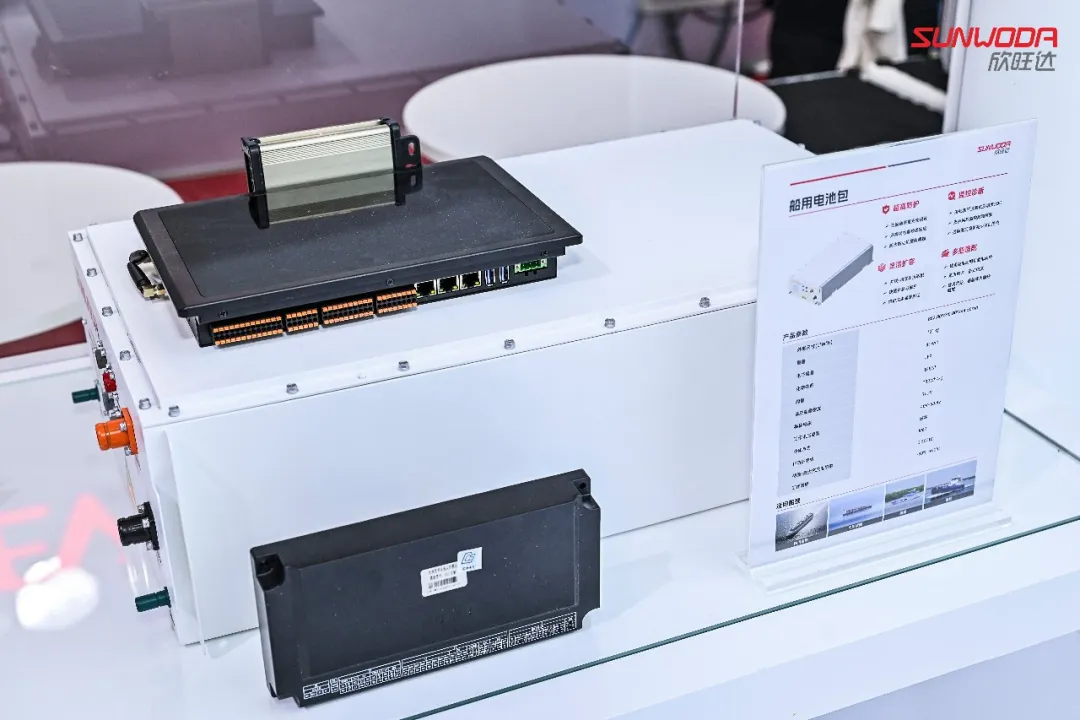
As the global maritime industry accelerates toward decarbonization, battery technology is increasingly becoming the core pillar of next-generation ship propulsion systems. Recently, Sunwoda showcased its marine battery products and technological capabilities at CIBF (China International Battery Technology Conference & Exhibition). At the 2026 Asia Yacht Show, the company made a systematic public debut of its complete marine battery product line — the "SAIL" solution (S - Safety & Specialist, A - Adaptive, I - Intelligent, L - Leading).
Seven Years of Strategic Development: From Cell Supplier to System-Level Solution Provider
Although this is the first comprehensive public unveiling of Sunwoda’s marine battery products, its exploration in this field began years ago. In 2019, Sunwoda’s 142Ah cell successfully obtained CCS (China Classification Society) certification, becoming one of the earliest domestic lithium battery companies approved for maritime use. By 2021, the company had supplied battery cells for mineral ore vessels and tourist boats, including sightseeing boats equipped with 142Ah cells, which are now operational in domestic scenic areas. At this stage, the focus was on validation rather than immediate commercialization, ensuring product safety and reliability through real-world operational testing.
In the following years, Sunwoda continued refining product consistency, supply chain maturity, and multi-ship adaptability, gradually achieving the capability to scale from “usable” to “replicable.” With the establishment of a dedicated marine battery team, the company has advanced from a single-cell supplier to a system-level solution provider.
In February 2026, two 3,000-ton methanol hybrid container ship projects, invested in by Sunwoda, officially began construction and are expected to be launched by year-end. These ships will be equipped with marine battery systems using Sunwoda’s 268Ah cells and operate under a “methanol-assisted + electric propulsion” model, further validating the system’s performance over longer voyages and complex operating conditions. Additionally, Sunwoda, in collaboration with Dalian Maritime University, is developing a new energy intelligent yacht project that combines cutting-edge battery technology with maritime engineering research to create a benchmark for high-end green vessels. The yacht is scheduled for launch in August 2026, providing real-world marine testing.
The debut of the full-line SAIL marine solution represents a concentrated demonstration of Sunwoda’s matured marine battery capabilities. The exhibition showcased the complete product matrix from cells to battery packs, along with core technical modules such as BMS, thermal management, liquid-cooling structures, and control strategies. Adaptation solutions for different ship types, including sightseeing boats, yachts, patrol boats, and cargo vessels, were also presented.
Engineering for Marine Environments: Product Design and Technical Challenges
The newly released 314Ah and 268Ah cells and their integrated battery systems form Sunwoda’s "dual-path" product strategy. The 314Ah cell prioritizes safety and long-term stable operation, providing endurance solutions for tour boats and inland cargo vessels, with energy capacities ranging from 32kWh to 6,168kWh. The 268Ah cell emphasizes high-rate performance, offering instantaneous power bursts for law enforcement and workboats, with 10%-80% fast charging achievable within 15 minutes, suitable for high-frequency operation scenarios and energy configurations ranging from 30kWh to 5,760kWh.
This strategy addresses varying ship requirements: leisure vessels focus on passenger experience, whereas cargo and high-frequency vessels prioritize efficiency. Notably, fast-charging capability could reduce reliance on battery-swapping for short, high-frequency routes, significantly shortening port dwell times.
Marine batteries also face more complex engineering challenges, including weight limitations, high-humidity and high-salinity environments, restricted cabin space, and insufficient ventilation. To address these, Sunwoda employs liquid-cooling technology with a “sandwich” structure for efficient thermal management. IP65-level structural protection further enhances system-level safety. Compared to air cooling, liquid cooling offers significant advantages in heat dissipation and stability. Future plans include incorporating AI technology for more intelligent energy and thermal management.
Scaling Up: Global Market and Strategic Expansion
The electrification of ships is currently transitioning from demonstration to large-scale adoption. Regional pathways differ: China is driven by policy and technology, Southeast Asia by tourism and cost, Europe by carbon regulations, and the U.S. by user experience.
Electric propulsion not only changes power systems but also significantly enhances sailing comfort, particularly benefiting passengers prone to seasickness. Electrification also lays the groundwork for smart ship upgrades. With deeper integration of battery systems, electric drives, and hull control systems, future vessels can achieve precise energy management, condition monitoring, fault prediction, and operational data analysis, enhancing safety, operational efficiency, and user experience. For operators, this enables real-time monitoring of each ship’s operational status, energy consumption, and health index, shifting fleet management from “experience-driven” to “data-driven” and improving both individual vessel efficiency and overall fleet coordination.
Looking ahead, Sunwoda plans to continue expanding into key overseas markets such as Indonesia and Europe, accelerating brand and product deployment, and positioning itself at the forefront of the global maritime decarbonization wave.
Popular Articles
Contact Details
Worktime : Monday to Friday 9am - 6pm (HKT)
WhatsApp/Wechat/Mobile : +8613645616165
Email : info@lifepo4cellstore.com