Blog
12V 100Ah vs. 24V 100Ah Batteries: Key Differences & Best Uses
2026-04-16 | Eric
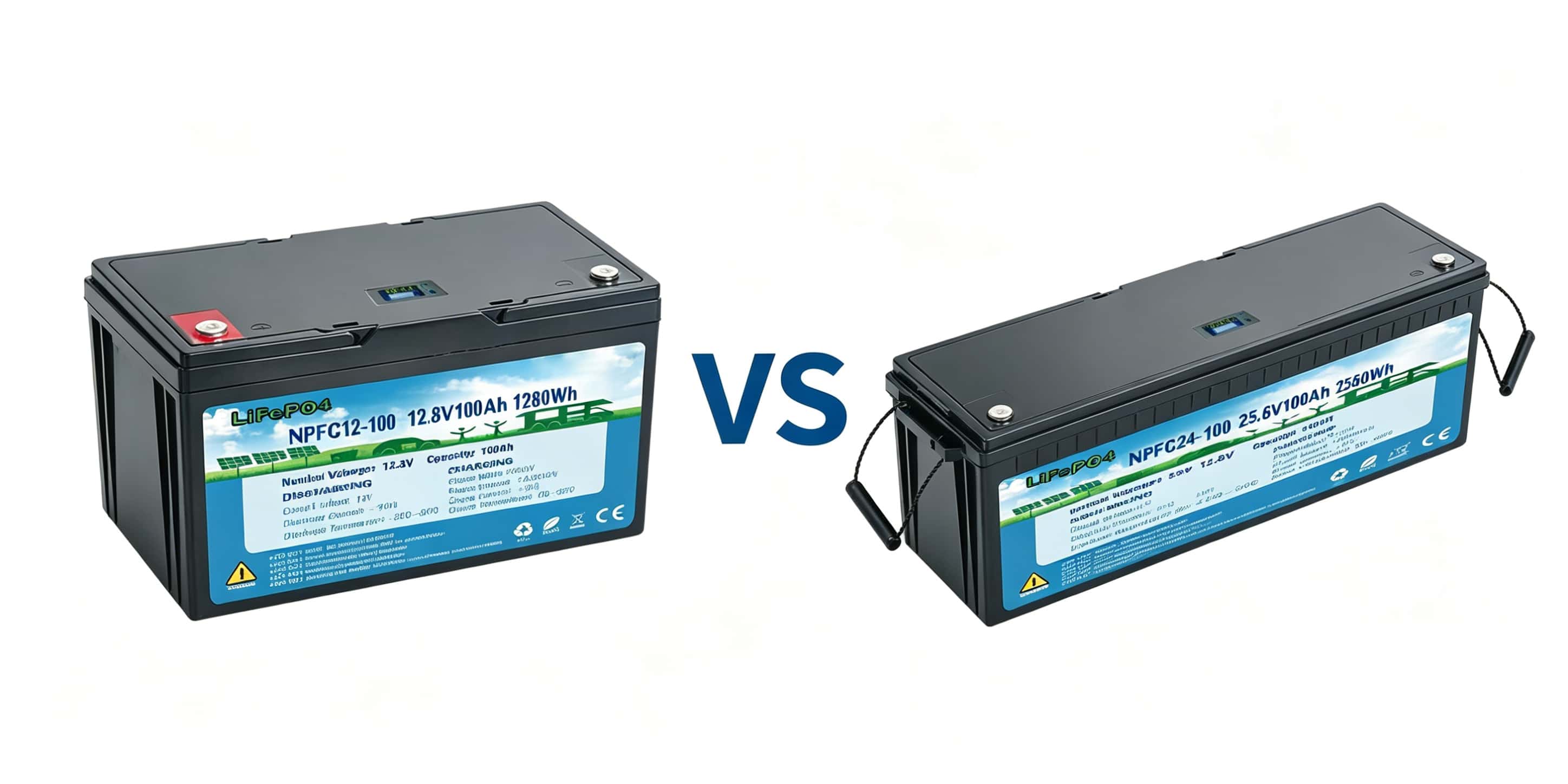
Selecting the appropriate battery is crucial for optimizing the efficiency, longevity, and overall performance of any energy system. Batteries serve as the heart of energy storage, and understanding their voltage and capacity ratings is key to choosing the right option for your application. In this comprehensive guide, we will compare 12V 100Ah and 24V 100Ah batteries to help you make an informed decision based on your specific needs.
Understanding Battery Voltage and Capacity
What is Voltage?
Voltage represents the electrical potential that drives the current through a circuit. In practical terms:
- 12V Batteries: Provide lower voltage, ideal for small or standard systems.
- 24V Batteries: Offer higher voltage, reducing current demand, which enhances system efficiency.
What Does 100Ah Mean?
The term "Ampere-hour" (Ah) indicates the total energy a battery can store and deliver over time. For example, a 100Ah battery can provide 1 ampere for 100 hours or 10 amperes for 10 hours. This rating plays a significant role in determining how long a battery will run before needing recharging.
Energy Storage Formula:
Energy in watt-hours (Wh) is calculated as: Energy (Wh) = Voltage (V) × Capacity (Ah)
- 12V 100Ah Battery: 1,200 Wh
- 24V 100Ah Battery: 2,400 Wh
This difference in energy storage capacity is an essential factor when comparing these two battery types.
12V 100Ah Batteries: Features and Applications
Key Characteristics:
- Voltage: 12V
- Capacity: 100Ah
- Energy Storage: 1,200 Wh
- Portability: Compact and lightweight, making it easier to transport and install.
Common Applications:
- Recreational Vehicles (RVs): Ideal for powering lights, fans, and small appliances.
- Marine: Suitable for powering trolling motors, fish finders, and boat lighting.
- Solar Storage: Great for small-scale residential solar installations.
- Backup Power: Provides reliable power for critical devices such as routers, medical devices, and security systems during outages.
Advantages:
- Compatibility with most standard systems.
- Affordable and readily available.
- Easy installation and maintenance.
24V 100Ah Batteries: Features and Applications
Key Characteristics:
- Voltage: 24V
- Capacity: 100Ah
- Energy Storage: 2,400 Wh
- Higher Energy Density: Allows for longer runtimes and superior performance in energy-intensive systems.
Common Applications:
- High-Demand Solar Systems: Perfect for larger off-grid systems that require high efficiency and prolonged battery life.
- Electric Vehicles (EVs): Powers electric motors and energy-dense systems efficiently.
- Industrial Use: Commonly used for heavy-duty applications like forklifts, advanced inverters, and industrial power systems.
- Telecom & Data Centers: Provides dependable backup power for critical operations.
Advantages:
- Lower current demand reduces energy loss and minimizes heat generation.
- Fewer parallel connections simplify system design and maintenance.
- Improved long-term efficiency for high-power applications.
12V vs. 24V: Key Differences
1. Energy Capacity
- 12V Batteries: Store 1,200 Wh, ideal for small to medium loads.
- 24V Batteries: Store 2,400 Wh, suitable for energy-intensive systems.
2. Efficiency and Current Flow
Voltage impacts the current drawn for a given power requirement. Higher voltage reduces current flow, which minimizes resistance and energy loss:
- 12V Systems: Higher current increases wiring thickness and heat generation.
- 24V Systems: Lower current allows for thinner, more cost-effective wiring and reduces energy losses.
3. Application Suitability
- 12V Batteries: Best for small to medium systems that need portability and are cost-effective.
- 24V Batteries: Preferred for high-demand systems like industrial, solar, or electric vehicle applications, where efficiency is critical.
4. System Design Complexity
- 12V Systems: Simpler to design and integrate with standard systems.
- 24V Systems: Require specialized inverters, charge controllers, and other components, which may increase upfront costs but improve long-term efficiency.
5. Cost Considerations
- 12V Batteries: Generally more affordable, making them a budget-friendly choice for smaller applications.
- 24V Batteries: Higher initial costs but offer lower operational costs over time, especially for large systems.
Factors to Consider When Choosing the Right Battery
1. Energy Needs
For small setups like RVs or residential solar installations, a 12V battery is often sufficient. For systems with high energy demands, such as electric vehicles or large-scale solar, a 24V battery offers superior efficiency.
2. Space and Portability
12V batteries are more compact and lightweight, ideal for portable systems or locations with limited space. On the other hand, 24V batteries are best suited for large, stationary installations where high efficiency is paramount.
3. Long-Term Efficiency
While 12V systems may be cost-effective upfront, 24V systems deliver better long-term efficiency, especially for high-demand applications.
4. Equipment Compatibility
Ensure that your inverter, charge controller, and other components are compatible with the chosen voltage rating to avoid system inefficiencies or compatibility issues.
Optimizing System Performance
Parallel vs. Series Connections
The flexibility of connecting batteries in series or parallel enables system customization:
- 12V Batteries in Parallel: Increases capacity but maintains the same voltage.
- 24V Batteries in Series: Increases both capacity and voltage, optimizing efficiency for high-demand applications.
Conclusion
The decision between a 12V 100Ah and a 24V 100Ah battery should be based on the specific requirements of your energy system:
- 12V Batteries: Ideal for portable, budget-conscious systems with low to moderate energy needs.
- 24V Batteries: Perfect for energy-intensive systems requiring high efficiency and long-term performance.
By understanding the differences between these two battery types and aligning them with your energy demands, you can ensure maximum efficiency, reliability, and cost-effectiveness. Whether you’re upgrading a solar system, designing an off-grid setup, or selecting batteries for industrial use, making an informed choice will help optimize performance and extend the lifespan of your energy system.
Popular Articles
Contact Details
Worktime :Monday to Friday 9am - 6pm (HKT)
WhatsApp/Wechat/Mobile :+8613645616165
Email : info@lifepo4cellstore.com