Blog
Understanding LiFePO4 Cell Voltage: A Complete Guide for Performance and Safety
2025-10-21 | Eric
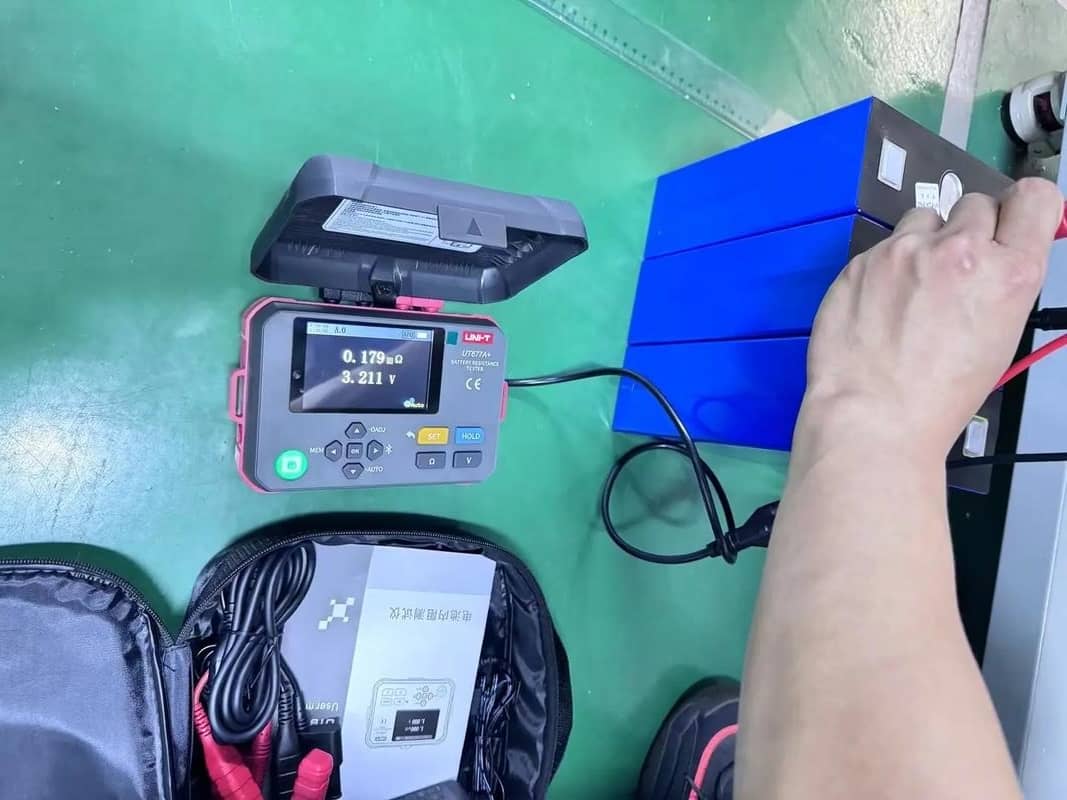
Lithium iron phosphate (LiFePO4) batteries have become a go-to energy storage solution across various industries—from electric vehicles and solar energy systems to marine applications and backup power units. Their growing popularity is due to their stability, safety, and long cycle life.
A critical factor that influences the efficiency, safety, and lifespan of LiFePO4 cells is their voltage range. In this article, we'll explore everything you need to know about LiFePO4 cell voltage—from optimal charging levels to how voltage impacts performance.
Why Voltage Matters in LiFePO4 Batteries
Voltage is the electrical potential difference that drives current through a circuit. For LiFePO4 batteries, voltage determines how much energy is stored, how efficiently it's delivered, and how safely the system operates. Understanding the voltage characteristics is essential for:
- Maximizing battery life
- Ensuring safe operation
- Maintaining system performance
- Avoiding over-discharge or overcharge scenarios
According to industry standards, LiFePO4 chemistry offers superior thermal and chemical stability, but only when operated within the recommended voltage range.
Optimal Voltage Range of LiFePO4 Cells
Each LiFePO4 cell has a nominal voltage of 3.2V, but the actual voltage varies depending on the state of charge (SOC), load conditions, and temperature.
| Condition | Voltage (Approximate) | Notes |
|---|---|---|
| Fully Charged | 3.6 – 3.65V | Charging beyond this risks degradation |
| Nominal Voltage | 3.2V | Standard operating voltage |
| Fully Discharged | 2.5V | Avoid discharging below this level |
⚠️ Minimum Voltage: ~2.5V
Dropping below 2.5V can cause permanent damage to the cell. Excessive discharge leads to:
- Loss of capacity
- Decreased cycle life
- Internal short circuits or dendrite formation
Battery management systems (BMS) are typically employed to prevent this condition.
⚠️ Maximum Voltage: ~3.65V
Charging above 3.65V can result in overcharging, which may cause:
- Swelling of the cell
- Increased internal resistance
- In rare cases, thermal runaway
Reliable charging systems with voltage cut-offs are critical to ensuring safe operation.
How Voltage Affects LiFePO4 Battery Performance
Voltage isn't just about safety—it's directly tied to how well the battery performs in real-world applications.
1. Capacity and Energy Density
Capacity is measured in ampere-hours (Ah). A higher charging voltage increases energy stored in the cell, slightly improving energy density. However, operating too close to the upper limit reduces cycle life. For optimal results:
- Maintain charge within 10%–90% of capacity
- Avoid regular full discharges or charges
2. Power Output
Power output is calculated as voltage × current. A healthy voltage range enables:
- Stronger and more consistent output
- Better performance under heavy load
- Suitable for EV acceleration, power tools, and marine propulsion
3. System Efficiency
Voltage efficiency matters for both charging and discharging processes. Within the ideal voltage window, LiFePO4 cells offer:
- Round-trip efficiency of ~95–98%
- Minimal energy loss as heat
- Better performance in temperature-variable environments
Conclusion
Voltage control is the foundation of safe, efficient, and long-lasting LiFePO4 battery systems. Whether you’re building a large-scale energy storage setup or choosing the right power source for an electric vehicle, understanding these voltage fundamentals will help you make smarter decisions.
Popular Articles
Contact Details
Worktime :Monday to Friday 9am - 6pm (HKT)
WhatsApp/Wechat/Mobile :+8613645616165
Email : info@lifepo4cellstore.com