News
Ford Enters the Energy Storage Market with DC Storage Cabinet Targeting Tesla Megapack
2026-05-31 | Eric
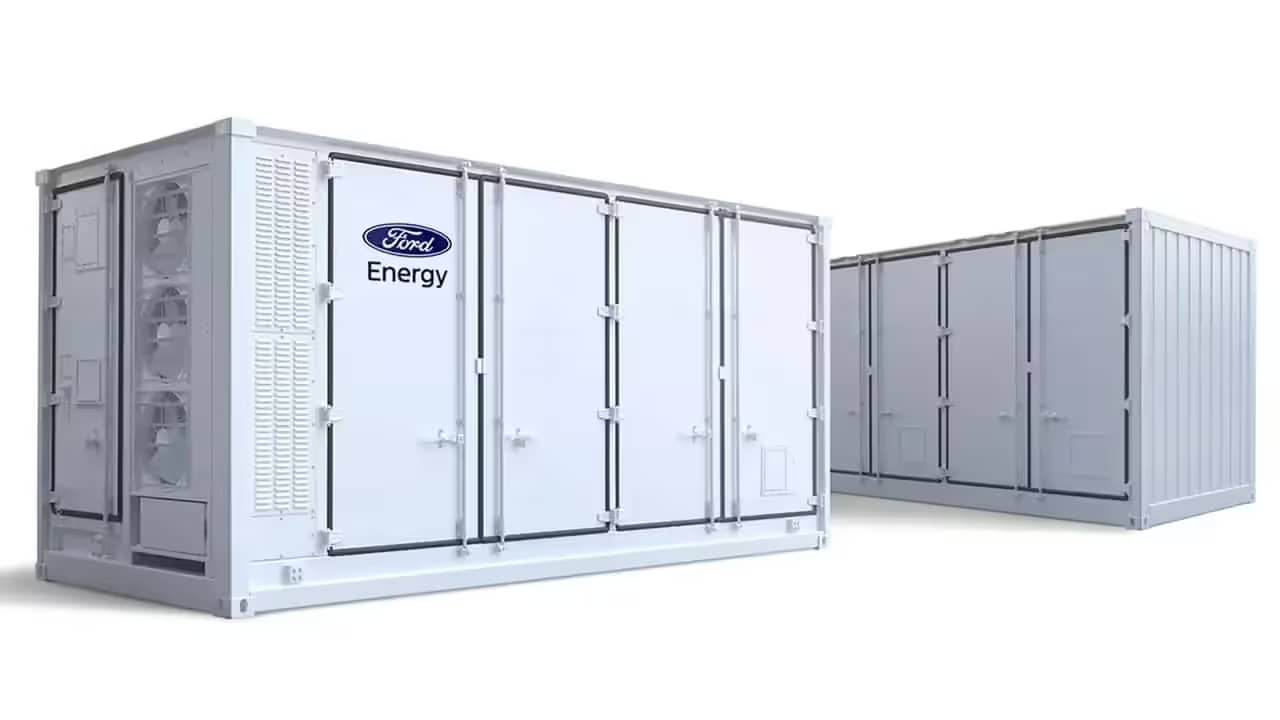
May 12 news After failing to surpass Tesla in electric vehicle sales, Ford has now officially entered the battery energy storage market through its new subsidiary, Ford Energy. The company’s first product, the DC storage cabinet, is positioned as a direct competitor to Tesla’s Megapack large-scale energy storage system.
The energy storage industry is currently experiencing rapid sales growth. Meanwhile, since the United States ended the $7,500 federal EV tax credit program in September last year, the electric vehicle market has noticeably cooled. Against this backdrop, Ford is leveraging its extensive manufacturing infrastructure to seize new opportunities in this growing sector.
Ford Energy’s flagship product is designed for a minimum service life of 20 years. It integrates hundreds of 512Ah lithium iron phosphate cells (LFP cells) within a standard 20-foot container, along with a full suite of essential power electronics.
The product is available in both two-hour and four-hour energy storage configurations. It features a liquid cooling thermal management system and a three-tier battery management system that continuously monitors voltage, current, temperature, state of charge (SOC), and state of health (SOH).
Each energy storage container is equipped with a layered fire protection system, including smoke, heat, and hydrogen detection, as well as ventilation and fire suppression mechanisms.
According to Ford Energy, the DC storage cabinet has a capacity of 5.45 MWh and a rated DC voltage range of 1040 to 1500 volts. All units are capable of operating in extreme environments ranging from -35°C to 55°C and meet an IP55 protection rating.
To support this business, Ford has repurposed its existing battery plant in Glendale, Kentucky. The facility was originally developed in partnership with SK On to assemble high-nickel battery packs for the Ford F-150 Lightning electric pickup and the E-Transit electric van. However, the two companies parted ways at the end of last year: Ford retained the Kentucky facility, while SK On fully took over a battery plant in Tennessee.
Given that production of the Ford F-150 Lightning was discontinued last year and sales of the E-Transit have been relatively weak, entering the highly profitable stationary energy storage market is a strategic move for Ford. In the previous year, Tesla’s fastest-growing business segment was its Megapack energy storage system, which generated $1.1 billion in gross profit in the fourth quarter alone.
Ford stated that its planned production capacity will cover the entire value chain—from electrode roll materials and individual battery cell module assembly to complete energy storage container manufacturing. The project targets an annual production capacity of 20 GWh, with initial customer deliveries scheduled for early 2027.
In comparison, Tesla remains far ahead in the energy storage sector, with an annual total production capacity of 80 GWh, equivalent to approximately 20,000 Megapack units. The company has already deployed over 47 GWh of energy storage projects across more than 65 countries worldwide.
Popular Articles
Contact Details
Worktime : Monday to Friday 9am - 6pm (HKT)
WhatsApp/Wechat/Mobile : +8613645616165
Email : info@lifepo4cellstore.com